Why Choose an Electronic Balance?
An Electronic Balance can turn a small sample into a dependable measurement, but its value depends on more than the number glowing on the display. A milligram of powder, a fine gold wire, or a tiny batch of laboratory reagent may require careful weighing. Electronic balances offer fast readings, clear digital displays, and useful features such as tare functions and selectable units. The right model can make routine work easier. The wrong one can create false confidence.
Mass-metrology specialist Dr. Richard S. Davis has contributed to the science of precise mass measurement. A practical principle for this guide is: “A precise reading is only useful when the weighing conditions are controlled.” Treat that as an editorial summary, not a verified quotation from Davis. In practice, a draft shield can help block air currents, while a level indicator helps show whether the balance sits evenly. Even a nearby air vent or a warm container can affect a sensitive reading.
Choosing a balance starts with the sample size, required readability, and working environment. A jewelry bench may need different capacity and protection than a teaching lab. Calibration, maintenance, and operator habits matter, too. Not every task needs the most sensitive instrument. And a more precise display does not automatically mean a more accurate result. There is a judgment call here: specifications help, but real samples and real workspaces reveal what suits you. This guide explores why an Electronic Balance may be the right tool, and where its limits deserve a second look.
What an Electronic Balance Measures: Mass, Capacity, and Readability
Why Choose an Electronic Balance?
What an Electronic Balance Measures: Mass, Capacity, and Readability
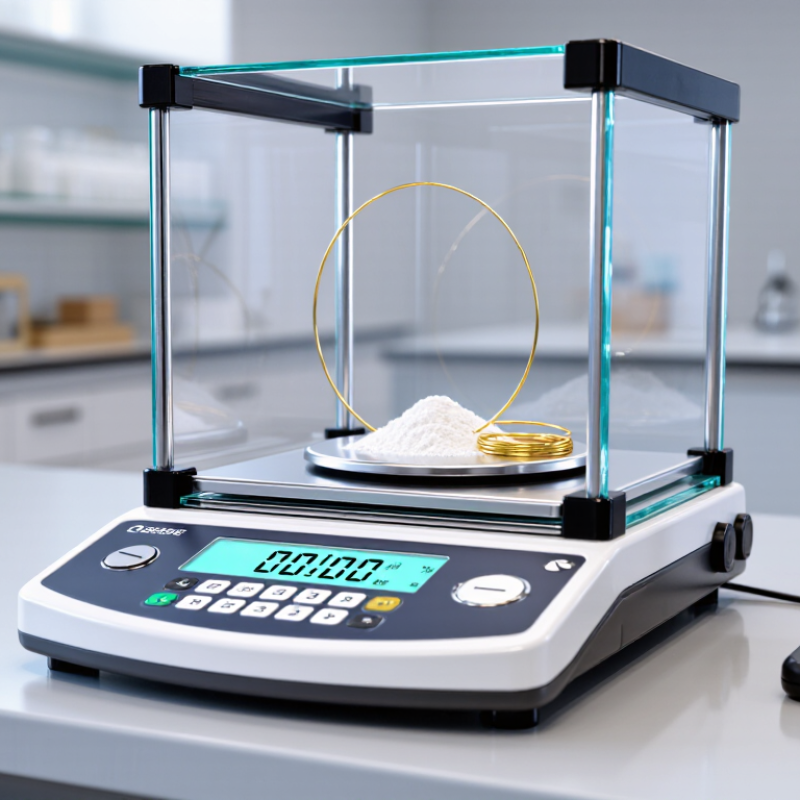
An electronic balance measures mass, usually displayed in grams or milligrams. Place a dry sample on the pan, wait for the digits to settle, and record the reading. It does not directly measure volume or density; those require other measurements. Capacity is the greatest load the balance is designed to handle. For example, a 200-gram balance should not carry a 250-gram container and sample together. Exceeding its capacity can damage the instrument or make results unreliable.
Readability is the smallest change shown on the display, such as 0.01 g. It is not the same as accuracy. A balance may show several decimal places but still produce unstable readings near a draft, vibration, or warm equipment. Small details matter. Even an empty pan can drift as room conditions change, so check the manual and allow readings to settle.
Tips: Tare the empty container before adding a sample. Keep the pan clean and centered, and avoid leaning on the bench while weighing. For critical work, check performance with a suitable reference weight.
How Electromagnetic Force Restoration Enables 0.1 mg Readability
Why Choose an Electronic Balance?
How Electromagnetic Force Restoration Enables 0.1 mg Readability
An electronic balance with 0.1 mg readability displays changes as small as one ten-thousandth of a gram. That fine step can help when weighing small powder samples, filter residues, or tiny components. But readability is not the same as accuracy. A display that changes in 0.1 mg increments does not guarantee every result is accurate to 0.1 mg.
Inside an electromagnetic force restoration balance, a sample presses down on the weighing pan. A position sensor detects the movement, and a control system sends current through a coil in a magnetic field. The resulting force counteracts the load and brings the mechanism back to its reference position. The required current is converted into a mass reading. Small changes can be detected. That is the principle.
Good technique still matters. Level the balance, let it warm up, and keep doors closed while weighing. Air currents, vibration, temperature shifts, and static can all disturb a sensitive reading. Even a sleeve brushing the bench may show up. Calibration and suitable check weights help verify performance, but they cannot fix careless handling. The method is powerful, not magic. A rushed reading may still need a second look.
Why it matters: In an electromagnetic force restoration balance, a feedback system applies an electromagnetic force to counteract the load. Under standard gravity (9.80665 m/s²), a 0.1 mg mass corresponds to an ideal balancing force of about 0.981 μN. Readability is the smallest displayed increment; it does not by itself indicate measurement accuracy.
Choosing a Balance: Matching Readability to Sample Size
Why Choose an Electronic Balance?
Choosing a Balance: Matching Readability to Sample Size
A balance’s readability is the smallest displayed increment, not a promise of accuracy. A display showing 0.001 g changes in one-milligram steps. It does not prove that a one-milligram sample can be weighed reliably. Check the balance’s stated minimum weight and required tolerance before choosing a model.
Start with the samples you actually weigh. If routine portions are around 20 g, a balance readable to 0.01 g may suit many tasks; a finer display may not improve useful results. For smaller portions, finer readability can help, but drafts, vibration, and temperature shifts may affect readings. Small matters. A door opening nearby can make the last digit wander.
Remember the container. A heavy weighing vessel uses part of the balance’s capacity, so include its mass when checking the maximum load. Tare the vessel, then place the sample near the center of the pan. Keep the balance level and allow readings to settle. It is tempting to choose the finest display available. That can be wasteful if sample size, handling, and working conditions do not support it. Verify performance with suitable check weights and follow the instrument’s operating guidance.
Why Repeatability Matters: USP <41>’s 0.10% Requirement
An electronic balance is valuable only when its readings are dependable. Repeatability is central to that judgment. USP General Chapter <41> sets a quantitative limit: twice the standard deviation of at least 10 weighings, divided by the smallest net weight, must not exceed 0.001, or 0.10%. In practical terms, the balance’s minimum weight is 2,000 times its standard deviation. A clean display is reassuring, but it is not proof.
For example, if ten repeated measurements produce a standard deviation of 0.2 mg, the calculated minimum weight is 400 mg. Below that amount, the balance may not meet the chapter’s repeatability criterion. This is a useful distinction: calibration checks accuracy, while repeated weighings reveal variation under current conditions. NISTIR 6969, Selected Procedures for Weighing, also describes controlled weighing practices; drafts, vibration, and handling can undermine a sound measurement. Small things matter.
Tips: Place the balance on a stable bench, close the draft shield, and let readings settle. Record ten measurements of a suitable test load. Recheck after moving the instrument or changing the room conditions. It is easy to trust a stable-looking number too quickly.
How OIML R 76 Classes Guide Balance Selection and Verification
An electronic balance offers a clear digital reading and repeatable measurements, but its display resolution alone does not show whether it suits a task. OIML R 76 classifies non-automatic weighing instruments as Class I, II, III, or IIII. These classes reflect metrological requirements, including permissible errors and verification scale intervals. They are not simple rankings of “better” and “worse.” A balance for fine laboratory work may need a different class and capacity from one used for routine portion weighing.
Choose a class by considering the smallest load, the required accuracy, and the balance’s maximum capacity. Check the instrument’s marked verification interval, e, as well as its displayed interval, d; they may differ. In practice, a class label alone is not enough. A draft near an open window or a warm sample placed on the pan can still affect results. OIML R 76 provides a framework, while applicable local rules determine whether legal verification is required. Verification and calibration are also different: verification assesses conformity against requirements, while calibration documents measurement performance.
Tips: Place the balance on a stable, level surface. Let it warm up as instructed, then check zero and use suitable test weights. Keep a brief record. Small habits matter. Reconsider the setup if readings drift.