
Leave Your Message

China Top 10 Electromagnetic Force Balance Manufacturers

China’s electromagnetic measurement sector has expanded from basic weighing equipment to highly controlled force-measurement systems. This growth supports laboratories, pharmaceutical plants, aerospace testing, and precision manufacturing.

This guide introduces China’s Top 10 Electromagnetic Force Balance Manufacturers. It considers measurement accuracy, repeatability, electromagnetic compensation, sensor stability, software capability, and after-sales support. It also examines calibration procedures, traceability documents, enclosure design, and performance under temperature changes. These details matter when a balance measures tiny forces beside vibration, airflow, or electrical interference.

NIST physicist Richard Steiner described the Kibble balance as “a very complicated instrument.” That observation also applies to many advanced Electromagnetic Force Balance systems. Their performance depends on more than a display resolution. Coil alignment, magnetic-field uniformity, circuit design, and regular verification can influence real results. Small errors become visible.

The selected manufacturers represent different strengths. Some focus on laboratory instruments. Others develop customized industrial platforms. A few emphasize export service, certification, or integrated automation. Buyers should compare uncertainty budgets, not only product brochures. They should also request application data from similar working environments.

No ranking is flawless. Product specifications can change, and public technical information may remain incomplete. Some manufacturers publish impressive figures without showing enough test conditions. That deserves careful questioning. The strongest supplier is not always the largest one. It is the company that explains limitations clearly, supports calibration, and responds consistently after installation.

This introduction provides a practical starting point for evaluating China’s leading manufacturers. Final decisions should follow independent testing, technical consultation, and documented site requirements.
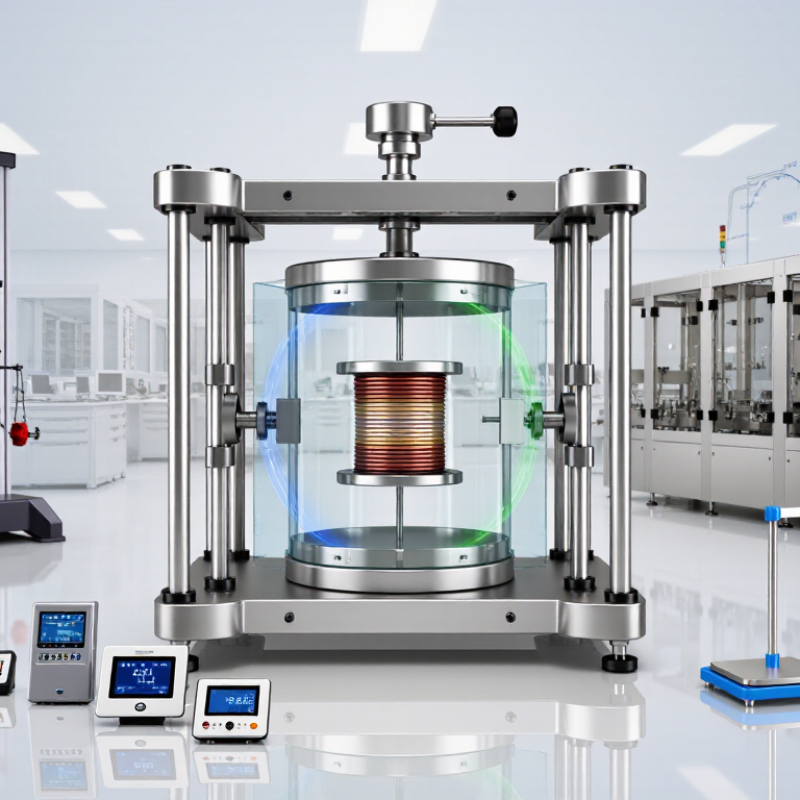
China Top 10 Electromagnetic Force Balance Manufacturers

Definition and Working Principles of Electromagnetic Force Balances

An electromagnetic force balance is a precision weighing instrument that measures mass by balancing a load with electromagnetic force. Instead of relying only on mechanical movement, it uses a coil, magnetic field, position sensor, and control circuit. This design supports high readability in laboratories and industrial quality checks.

When an object rests on the weighing pan, its weight creates a small displacement. The position sensor detects this movement almost immediately. A feedback circuit then sends controlled current through the coil. The coil produces an opposing electromagnetic force until the system returns to its reference position. The required current is proportional to the applied load, so the instrument converts that signal into a mass reading.

The process sounds simple. Real conditions are less obedient. Temperature changes can alter coil resistance, while vibration may disturb the pan or sensor. Experienced technicians allow warm-up time, level the instrument, and check repeatability with certified reference masses. Air movement matters too, especially with lightweight samples. A draft shield can reduce unstable readings. Calibration should match the intended range, not only the maximum capacity. Even a clean display cannot correct poor handling. Operators should record unusual drift, repeated zero changes, and differences between increasing and decreasing loads. These observations often reveal installation or maintenance problems before they affect production decisions.
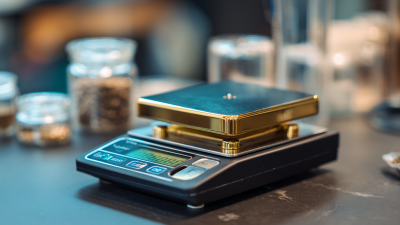

Key Performance Standards for Comparing Manufacturers

China Top 10 Electromagnetic Force Balance Manufacturers

Key Performance Standards for Comparing Manufacturers

Comparing electromagnetic force balance manufacturers requires more than reading maximum capacity. Measurement accuracy should be checked across the instrument’s full working range. A balance showing 0.1 mg resolution may not deliver that performance under every load. Ask for repeatability data, linearity results, and uncertainty statements from controlled tests.

Stability matters in real laboratories. Observe how quickly the reading settles after placing a sample. Check drift during a six-hour operating period. Temperature compensation is also important, especially near ovens, drafty doors, or production lines. A sturdy housing helps, but it cannot replace proper environmental testing. Look for calibration records linked to recognized measurement standards. Clear procedures reveal technical maturity.

Production consistency deserves equal attention. Request sample inspection reports, software revision records, and service response times. A manufacturer with experienced engineers should explain failure limits, not only advertise ideal results. Ask whether spare sensors and calibration support remain available after installation. A glossy specification sheet can still mislead. No single score tells everything. In practice, one supplier may offer stronger repeatability, while another provides better integration or faster maintenance. That trade-off should be recorded before ranking the leading manufacturers.

China Top 10 Electromagnetic Force Balance Manufacturers - Key Performance Standards for Comparing Manufacturers

Manufacturer-neutral comparison based on OIML R60 accuracy classes and the number of verification intervals.

The chart uses OIML R60 accuracy classes commonly applied to weighing and force-measurement load cells. A higher number of verification intervals indicates finer certified measurement capability. These standards provide an objective framework for comparing electromagnetic force balance manufacturers without presenting company-specific or brand-specific performance claims.

China’s Top 10 Electromagnetic Force Balance Manufacturers

China’s Top 10 Electromagnetic Force Balance Manufacturers are gaining attention as laboratories demand faster, traceable weighing. Public reports rarely isolate electromagnetic force balance technology. However, Grand View Research valued the global analytical instrumentation market at over USD 50 billion in 2023. This broader figure shows the scale of the precision measurement sector.

A practical review of China’s top 10 manufacturers should examine sensor stability, repeatability, calibration records, and service response. OIML R 76-1 remains a key reference for non-automatic weighing instruments. In real laboratory use, a balance may face vibration, temperature changes, and frequent door opening. A strong manufacturer should document performance under these conditions, not only show a polished specification sheet. Response times below one second can improve sample handling, but speed alone proves little.

The China Electronic Instruments Industry Association reported continued growth in domestic laboratory instrument demand during recent industry updates. Export capability also matters. Manufacturers should provide clear uncertainty data, multilingual manuals, and traceable calibration options. Some market rankings appear too confident because shipment data and private-label production are difficult to verify. That is worth questioning. Buyers should compare at least three years of technical records, not just current model prices. A useful shortlist also checks minimum sample weight, linearity, corner-load error, and software compatibility. Small details matter.

Product Applications Across Research and Industry

China Top 10 Electromagnetic Force Balance Manufacturers

Product Applications Across Research and Industry

Electromagnetic force balance systems convert load into an electrical signal through magnetic compensation. This design supports high-resolution weighing in research laboratories, calibration rooms, and production lines. In pharmaceutical testing, analysts use them for active ingredients, excipients, and formulation checks. Battery laboratories also measure powders, coatings, and electrolyte samples with strict repeatability requirements.

The BIPM’s 2023 KCDB recorded more than 25,000 calibration and measurement capabilities worldwide. That figure shows why traceability matters beyond the laboratory bench. OIML R76-1 defines four weighing accuracy classes, from special to ordinary. Users should match the balance class, readability, and capacity with the actual process. A microbalance may look impressive. It can still perform poorly near vibration, airflow, or temperature changes.

Tips: Place the instrument on a rigid, isolated table. Control drafts and allow thermal stabilization. Record repeatability before approving a method. ISO/IEC 17025 guidance also supports documented calibration and measurement uncertainty. In manufacturing, electromagnetic balances can help control filling, coating, blending, and incoming-material inspection. Their fast response reduces manual adjustments, but speed is not everything. Some facilities still overvalue readability and underestimate sample handling. A careful operator, stable environment, and defensible calibration record often matter more than the last displayed digit.

China Top 10 Electromagnetic Force Balance Manufacturers - Product Applications Across Research and Industry
No. Product Application Profile Electromagnetic Force Balance Function Primary Measurement Output Typical Sample Forms Research and Industry Uses Important Configuration Factors
1 Magnetic Susceptibility Measurement Measures the compensating electromagnetic force required to balance the force acting on a sample in a controlled magnetic-field gradient. Magnetic susceptibility, magnetic moment, and field-dependent magnetic response. Powders, pellets, liquids, single crystals, and small solid specimens. Materials science, condensed-matter physics, chemistry, geology, and quality control of magnetic materials. Magnetic-field strength, field gradient, sample geometry, temperature stability, and background correction.
2 Thermomagnetic Analysis Tracks the magnetic force or susceptibility of a specimen while temperature is increased, decreased, or held at defined steps. Magnetic response versus temperature, transition temperature, and thermal stability indicators. Ceramics, alloys, oxides, powders, and catalyst materials. Advanced materials research, metallurgy, ceramics development, and academic laboratories. Heating and cooling rate, atmosphere control, temperature range, furnace design, and buoyancy compensation.
3 Magnetochemistry and Molecular Materials Determines the magnetic force generated by paramagnetic, diamagnetic, or otherwise magnetically active chemical compounds. Molar magnetic susceptibility, effective magnetic moment, and magnetic behavior of compounds. Coordination compounds, metal complexes, powders, and crystalline materials. Inorganic chemistry, pharmaceutical research, coordination chemistry, and functional-materials development. Accurate mass measurement, sample-holder correction, temperature control, and diamagnetic contribution correction.
4 Magnetic Material Quality Control Provides repeatable force-based testing for magnetic powders, ferrites, soft magnetic materials, and other production samples. Relative magnetic response, batch-to-batch uniformity, and material acceptance indicators. Powders, compacted parts, ceramic components, and metal coupons. Electronic components, permanent magnets, ferrite manufacturing, powder processing, and incoming inspection. Standardized sample geometry, calibration traceability, repeatability, throughput, and automated data recording.
5 High-Temperature Magnetic Materials Research Measures magnetic force under controlled elevated-temperature conditions to evaluate phase changes and magnetic transitions. Temperature-dependent susceptibility, transition points, and magnetic stability during heating cycles. High-temperature alloys, ceramics, oxides, refractories, and sintered materials. Energy materials, aerospace materials, metallurgy, furnace research, and high-temperature chemistry. Furnace atmosphere, thermal shielding, temperature uniformity, sample oxidation, and drift compensation.
6 Magnetic Powder and Particle Characterization Uses the force response of a weighed powder or particle bed to evaluate bulk magnetic behavior under a known magnetic field. Mass-normalized magnetic response and comparative susceptibility of powder batches. Magnetic nanoparticles, pigment powders, catalyst powders, and mineral concentrates. Nanotechnology, pigments, mineral processing, battery research, catalysts, and additive manufacturing. Packing density, particle segregation, moisture, sample mass, and container contribution.
7 Magnetic Separation and Process Development Quantifies magnetic response to support the design and evaluation of magnetic separation, concentration, or recovery processes. Magnetic response of feed, concentrate, residue, or separated fractions. Mineral slurries, solid concentrates, industrial powders, and process residues. Mining, recycling, environmental remediation, mineral beneficiation, and process engineering. Moisture content, particle-size distribution, matrix effects, sample homogeneity, and field-gradient selection.
8 Force and Mass Metrology Converts an electromagnetic actuator current into a controlled balancing force for precision weighing or force comparison. Mass, force-equivalent signal, balance indication, and repeatability performance. Calibration masses, reference artifacts, small mechanical loads, and test components. Calibration laboratories, precision weighing, instrument development, and industrial metrology. Current stability, position sensing, mechanical alignment, vibration isolation, and environmental monitoring.
9 Magnetic Levitation and Buoyancy Studies Balances magnetic force against gravity or buoyancy to investigate levitation behavior and field-gradient effects. Levitation force, equilibrium position, apparent mass, and susceptibility-related behavior. Diamagnetic materials, small biological specimens, liquids, and nonmagnetic objects. Physics education, fluid research, biological materials, sensor development, and demonstration systems. Field profile, gradient uniformity, sample density, temperature, air buoyancy, and mechanical stability.
10 In-Process and Automated Magnetic Testing Combines electromagnetic force balancing with software control, automated sample handling, and digital data acquisition. Real-time or sequential magnetic-response data, statistical process indicators, and pass/fail results. Production pellets, molded components, powders, coated parts, and standardized test specimens. Smart manufacturing, electronics, magnetic-component production, laboratory automation, and process monitoring. Measurement cycle time, robotic handling, calibration intervals, database integration, and environmental shielding.
The table presents application-level product dimensions and technically established use cases for electromagnetic force balance systems. Performance specifications vary according to instrument configuration, magnetic circuit design, sensor architecture, sample geometry, and operating environment.

Selection Criteria for Buyers and Laboratory Users

Choosing among China’s top electromagnetic force balance manufacturers requires more than comparing price and stated capacity. Buyers should examine repeatability, linearity, minimum load, response time, and long-term drift. A balance may show 0.1 mg resolution, yet perform poorly near its upper range. Ask for test data, not only brochure figures. Check whether calibration uses traceable standards and whether certificates identify uncertainty, date, and environmental conditions.

Laboratory users should inspect the weighing chamber, draft shield, display readability, and software records. A stable reading should not change noticeably when nearby equipment starts. Test the balance with certified weights at several points, including low, middle, and maximum capacity. Observe warm-up behavior for at least thirty minutes. Small drafts matter. So does vibration.

Service quality deserves equal attention. Confirm spare-part availability, remote support, repair procedures, and recalibration intervals. Manufacturers with clear technical documentation usually reduce installation mistakes. However, a polished manual does not guarantee consistent production. Request sample inspection reports and ask how failed units are handled. One test can mislead. I would also leave room for uncertainty: laboratory humidity, operator technique, and unstable benches can distort results. The best selection is not always the most precise model. It is the model that remains dependable under your actual workload, maintenance ability, and measurement routine.