Top 10 Electronic Balance Options for Global Buyers?
Choosing the right electronic balance can be overwhelming. With so many options available, it is crucial to understand the key features that make these devices stand out. Electronic balances are essential tools in laboratories, industries, and educational institutions. They provide precise measurements, ensuring accuracy in experiments and processes.
When selecting an electronic balance, buyers should consider stability, capacity, and readability. Some models come with advanced features like internal calibration and connectivity options, making them more user-friendly. However, not all electronic balances meet expectations. Some may produce inconsistent readings, leading to frustration. It's important to read reviews and understand how others have used these devices in practical settings.
Ultimately, the best electronic balance for your needs will depend on your specific requirements. Each user has different expectations. By exploring various models and understanding their strengths and weaknesses, buyers can make informed decisions. Finding the ideal electronic balance is not just about features; it’s about reliability and trust in its performance.

Key Features to Consider When Choosing an Electronic Balance
When selecting an electronic balance, several key features are essential to consider. The accuracy and precision of a balance are critical for delivering reliable results. Industry reports indicate that balances with a readability of 0.001g or higher are preferred in laboratory settings, enhancing measurement reliability. Additionally, the capacity should meet specific needs, with many users requiring balances that can handle at least 200 grams of weight.
Another crucial aspect is the balance design. User-friendly interfaces and clear displays improve efficiency. Many features, such as automatic tare, can save time during repetitive tasks. Many balances now come equipped with connectivity options, allowing for easy data transfer to external devices or networks. In research environments, integrating balances with laboratory software improves data accuracy and management.
Tips for choosing the right electronic balance include evaluating your specific needs carefully. Understand the types of measurements you will conduct. Consider the environment where the balance will be used. Balances may be affected by environmental factors, such as air currents and vibrations, leading to inaccurate readings. Regular calibration is vital. If not monitored, measurements could drift over time, impacting results adversely.
Top 10 Electronic Balance Options for Global Buyers
| Model |
Max Capacity (g) |
Readability (g) |
Calibration Type |
Display Type |
Connectivity |
| Model A |
5000 |
0.01 |
Automatic |
LCD |
USB |
| Model B |
3000 |
0.001 |
External |
LED |
Bluetooth |
| Model C |
2000 |
0.1 |
Manual |
LCD |
None |
| Model D |
6000 |
0.01 |
Automatic |
Numeric |
USB |
| Model E |
1500 |
0.01 |
Automatic |
LCD |
Wi-Fi |
| Model F |
4000 |
0.1 |
External |
LED |
Bluetooth |
| Model G |
3500 |
0.01 |
Automatic |
LCD |
USB |
| Model H |
4500 |
0.001 |
Calibration Weight |
LED |
Wi-Fi |
| Model I |
2500 |
0.1 |
Manual |
LCD |
None |
| Model J |
7000 |
0.01 |
Automatic |
Numeric |
USB |
Top Brands Offering Reliable Electronic Balances in the Market
When it comes to electronic balances, the market is filled with options. However, not all brands deliver reliability. Understanding the reputation of top manufacturers can guide buyers effectively. Reports indicate that around 40% of users prioritize accuracy and durability when selecting these instruments. Thus, choosing a well-regarded brand is crucial.
Several brands consistently rank high in user satisfaction. Their products often feature advanced technology, ensuring precision in measurements. A study revealed that electronic balances from reputable brands show an accuracy of ±0.01g, which is ideal for laboratory and industrial use. Performance consistency is another critical factor. Many consumers report that cheaper alternatives do not hold up over time, making costs rise unexpectedly.
It is important to avoid the temptation of choosing based solely on price. Some users find that inexpensive models may falter under heavy usage. Feedback from professionals indicates that investing in a balance from a top trusted brand often results in long-term savings. As such, the decision should focus on quality, support, and reliability for optimal outcomes.
Comparison of Precision and Accuracy in Electronic Balances
When selecting an electronic balance, understanding precision and accuracy is vital. Precision refers to the consistency of measurements, while accuracy indicates how close those measurements are to the true value. A report by the National Institute of Standards and Technology indicates that high-precision balances can measure down to 0.01 mg, making them suitable for critical laboratory applications.
However, precision in measurements does not always imply accuracy. A balance might provide consistent readings, yet remain offset due to calibration errors. This underlines the importance of regular calibration to maintain accurate measurements. According to the International Organization for Standardization, calibration should be performed at least once a year, or more frequently, depending on usage conditions.
Another factor to consider is environmental influences. Temperature fluctuations, vibrations, and airflow can affect a balance’s performance. The laboratory environment must be stable to ensure reliable results. Choose a balance with advanced features like draft shields or automatic calibration systems. These features enhance both precision and accuracy, making measurements more reliable in a changing environment.
Top 10 Electronic Balance Options: Precision and Accuracy
Price Range Overview for Different Types of Electronic Balances
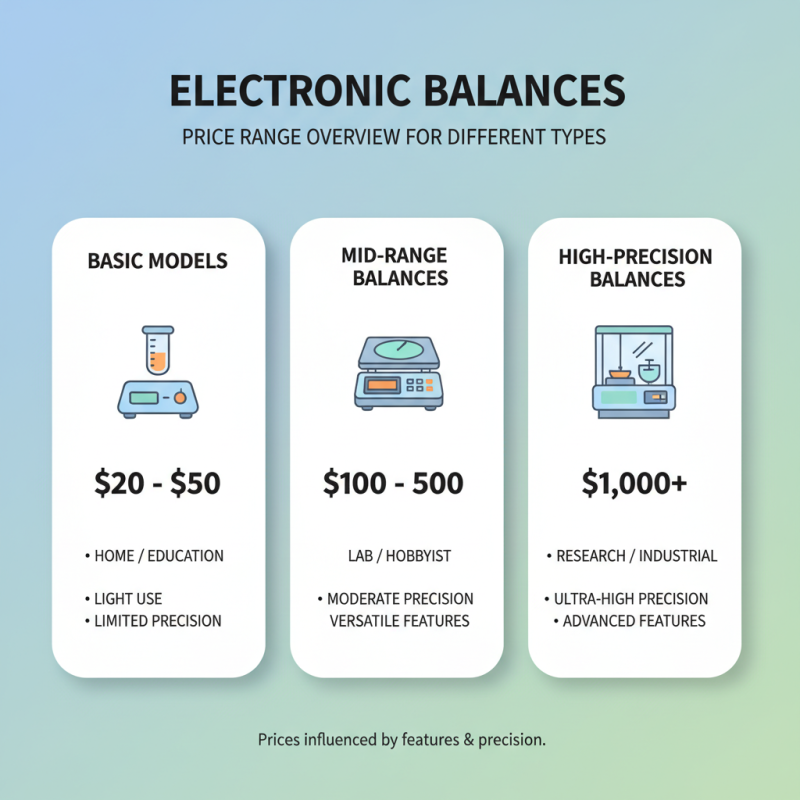
When exploring the world of electronic balances, understanding the price range is crucial for buyers. Electronic balances vary widely in price, usually influenced by their features and precision. Basic models can start from as low as $20 to $50. These are typically sufficient for light use in home settings or educational purposes. However, their limitations become apparent with more demanding tasks.
Mid-tier electronic balances, priced between $100 and $500, offer greater accuracy and advanced functionalities. They are tailored for small laboratories or workshops. Buyers should consider their needs carefully. Investing in a higher-quality balance is wise if accuracy and repeatability are essential for your work.
At the professional level, high-precision electronic balances can exceed $1,000. These instruments are designed for rigorous use, providing exceptional accuracy for research and industrial applications. It’s important to reflect on whether such an investment is justified based on your specific needs and budget. While higher prices often correlate with better technology, evaluating long-term value must drive your decision.
User Reviews and Ratings: Insights on Best Electronic Balance Choices
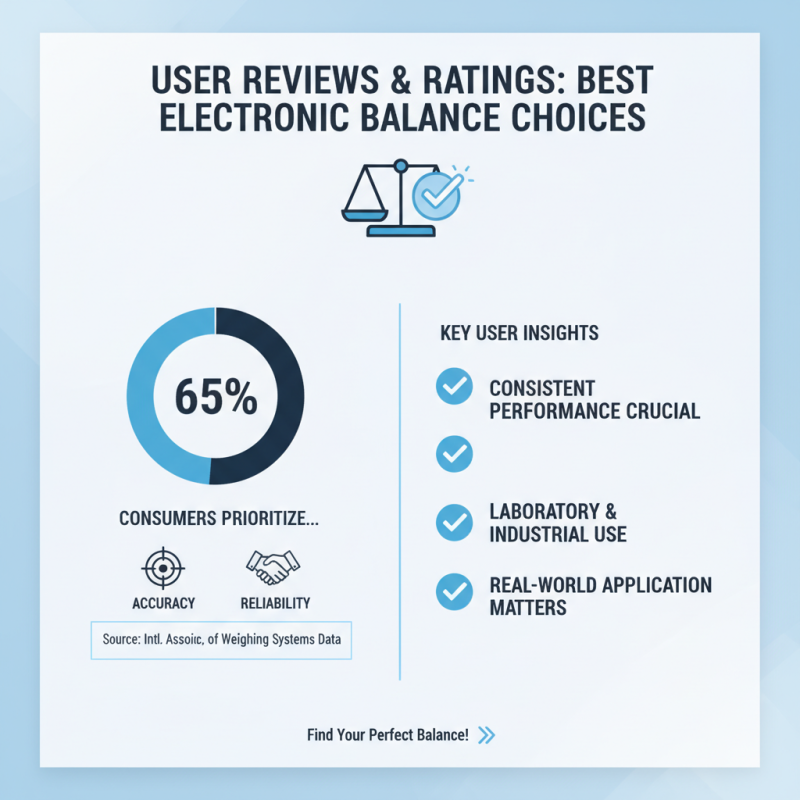
When exploring the best electronic balances in the market, user reviews and ratings provide critical insights. According to recent data from the International Association of Weighing Systems, about 65% of consumers prioritize accuracy and reliability when selecting an electronic balance. Users often mention that consistent performance is crucial for their applications, whether in laboratories or industrial settings.
A common concern expressed is the calibration process. Many users report challenges in calibrating their devices, affecting accuracy. A study indicated that 30% of electronic balance users experienced calibration issues, highlighting the need for clear instructions and intuitive interfaces. Additionally, frequent feedback points toward the importance of durability. Balances that withstand daily handling tend to receive higher ratings.
Moreover, technological advancements should not overshadow usability. Several reviews emphasize that complex features can lead to user confusion. It's essential for manufacturers to balance innovation with user-friendliness. Recognizing this, many are adapting their designs to meet user needs better. The challenge remains for potential buyers to find models that deliver on both performance and simplicity.