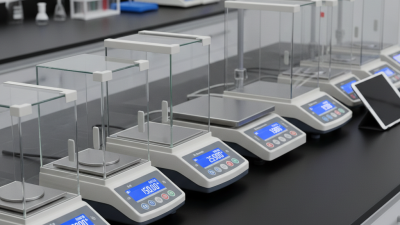
Choosing the right Electronic Balance manufacturer or supplier requires more than comparing prices and product photographs. In 2026, laboratories, pharmacies, food facilities, universities, and industrial plants will need dependable results under demanding conditions. A balance may appear precise on a specification sheet, yet its performance can change with vibration, air movement, temperature, humidity, and daily handling.
Measurement pioneer Lord Kelvin stated, “When you can measure what you are speaking about, and express it in numbers, you know something about it.” His observation remains highly relevant to Electronic Balance selection. Readability, repeatability, linearity, calibration support, capacity, and response time should be examined together. Practical details matter. A stable weighing table, level indicator, draft shield, and clear display can influence routine results more than buyers expect.
This guide introduces leading Electronic Balance manufacturers and suppliers for 2026. It considers product quality, technical expertise, after-sales service, software integration, certification practices, and application experience. Some suppliers excel in analytical laboratory work. Others focus on precision production, education, healthcare, or portable weighing. There is no universal best choice.
That point deserves attention.
A low-cost model may satisfy simple tasks, but it could disappoint during frequent measurements or strict quality checks. A premium balance may offer stronger stability, yet its advanced functions might remain unused. Supplier claims also require verification through technical documents, calibration records, warranty terms, and customer support reviews. Market positions can change quickly, so this overview should support careful comparison rather than replace professional evaluation.
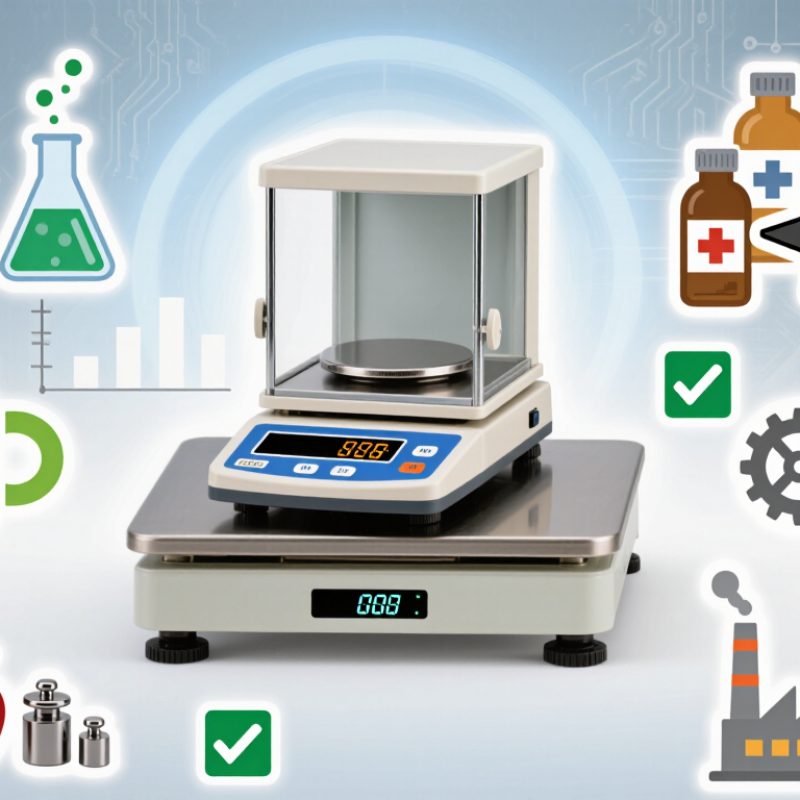
An electronic balance is a precision instrument that measures mass through an electronic sensing system. A load cell detects force when an object rests on the weighing pan. The balance then converts that force into a digital reading, usually in grams or milligrams. Unlike a basic household scale, it can detect very small changes in mass.
In laboratory and industrial settings, users place samples on a stable pan and wait for the display to settle. A draft shield helps protect the reading from air movement. Temperature, vibration, humidity, and nearby equipment can still affect performance. Regular calibration with certified reference weights improves confidence in the result. The balance should also sit on a firm, level surface. Small details matter.
A reliable electronic balance needs suitable readability, repeatability, capacity, and operating conditions. A balance designed for powders may not suit heavy components. Manufacturers and suppliers should explain calibration procedures, maintenance needs, and technical limits clearly. Users should record unusual readings instead of ignoring them. Even experienced operators make mistakes. A clean number is not always a correct number. Static electricity, damp containers, or warm samples can create errors. Allowing samples to reach room temperature often helps. In practice, careful handling matters as much as advanced electronics.

Electronic balances differ mainly in capacity, readability, and operating environment. Analytical balances commonly offer 0.1 mg readability, while precision models often range from 0.001 g to 0.01 g. Platform and bench balances handle heavier loads, making them suitable for warehouses, production lines, and material preparation. Counting balances add piece-weight memory for inventory work. Moisture balances combine weighing with controlled heating.
Accuracy is not only a display number. Drafts, vibration, temperature changes, and uneven tables can distort readings. A glass draft shield helps analytical models. Internal or external calibration supports repeatable checks. Overload protection, level indicators, automatic zero tracking, and sealed keypads improve daily reliability. Many current models also provide USB, Ethernet, or wireless data transfer. Convenient, but not always necessary.
The International Organization of Legal Metrology’s R 76 standard defines performance requirements for non-automatic weighing instruments. NIST Handbook 44 also provides inspection guidance used in regulated measurement environments. A 2024 market assessment by Grand View Research reported continued growth in laboratory weighing equipment, supported by pharmaceutical, food, and research applications. Exact forecasts differ between reports. That is worth remembering. A balance selected only by price may fail under humidity, vibration, or frequent cleaning. In practical testing, repeatability across several readings matters more than one impressive specification. Calibration records should also be reviewed, not merely stored and forgotten.
2026 Top Electronic Balance Manufacturers and Suppliers
How to Evaluate Balance Manufacturers and Suppliers
A reliable balance supplier should prove performance, not merely promise precision. Start with the intended load, readability, repeatability, and operating environment. A balance used near a production line faces vibration, dust, and temperature changes. A laboratory unit needs stronger traceability and tighter control. OIML R 76-1 defines four accuracy classes for non-automatic weighing instruments. Ask suppliers to identify the correct class and provide tested uncertainty data.
Traceability matters more than a polished brochure. The BIPM Key Comparison Database reports over 25,000 calibration and measurement capability entries worldwide. This supports a practical question: can the supplier connect calibration results to recognized national or international standards? Request a sample calibration certificate, adjustment records, and service intervals. NIST Handbook 44 also provides detailed performance and tolerance requirements for weighing equipment. Compare those requirements with the supplier’s actual test method. One weakness remains: many buyers compare only purchase prices. That can hide software limits, unstable readings, and expensive recalibration.
Tips: Test before ordering. Place certified weights near the balance’s lower and upper ranges. Record ten repeated readings, then check drift after thirty minutes. Ask about spare parts, response time, and technician qualifications. If the supplier avoids uncertainty data, pause. Maybe the specification is incomplete.
| Evaluation Dimension | What to Check | Practical Benchmark or Evidence | Recommended Questions | Weight |
|---|---|---|---|---|
| Measurement Capacity | Maximum load range and suitability for the intended samples, containers, and weighing procedures. | Select a model whose maximum capacity exceeds the normal working load without routinely operating near the limit. | What are the available capacity options, and how does performance change across the weighing range? | 8% |
| Readability and Accuracy | Smallest displayed increment, stated accuracy, linearity, eccentricity, and repeatability. | Laboratory models commonly offer readability from 0.001 g to 0.1 mg; industrial models generally use coarser increments. | Are readability, repeatability, linearity, and eccentricity specifications provided separately? | 14% |
| Repeatability | Consistency of repeated measurements under the same operating conditions. | Request test results based on repeated weighings at defined loads, temperature, humidity, and stabilization time. | What repeatability test method and sample size were used to establish the specification? | 10% |
| Calibration System | Internal or external calibration method, calibration intervals, adjustment procedure, and traceability. | A credible supplier should provide calibration instructions and a traceable calibration certificate when required. | Can calibration records be supplied, and are calibration weights available with documented class and traceability? | 10% |
| Metrology Documentation | Technical datasheets, uncertainty information, user manuals, inspection records, and conformity documents. | Documents should identify model configuration, test conditions, revision date, and applicable measurement requirements. | Which documents are included as standard, and which require an additional fee? | 8% |
| Environmental Stability | Performance under vibration, airflow, temperature variation, humidity, static electricity, and electromagnetic interference. | Analytical balances normally require draft protection and controlled placement; industrial units may require ingress and vibration protection. | What operating temperature, humidity, warm-up, vibration, and airflow limits are specified? | 9% |
| Construction and Protection | Load-cell design, housing materials, weighing-pan size, cleanability, ingress protection, and overload protection. | For washdown or dusty environments, verify an appropriate IP rating rather than relying on general marketing descriptions. | What protection rating and overload limit are documented for the exact configuration? | 7% |
| Compliance and Certification | Applicable electrical safety, electromagnetic compatibility, quality-management, and regulated-weighing requirements. | Certificates should be valid, applicable to the supplied model, and issued by a recognized or legally accepted body where required. | Can you provide current certificates and identify the exact models and production sites covered? | 9% |
| Software and Connectivity | USB, serial, Ethernet, wireless, data export, audit trail, printing, and integration with laboratory or production systems. | Confirm interface protocols, supported formats, user permissions, and whether connectivity features require optional licenses. | Can the balance export stable readings with timestamps, user identification, and calibration status? | 6% |
| Application Functions | Counting, percentage weighing, checkweighing, density determination, formulation, animal weighing, or dynamic weighing. | Functions should be demonstrated with the buyer's sample type and operating workflow before purchase. | Which functions are built in, and which require software, accessories, or a higher model tier? | 5% |
| Quality-Control Process | Incoming inspection, component control, final testing, serial-number tracking, and nonconformance handling. | Prefer suppliers that can provide inspection records and maintain traceability from production to shipment. | What final tests are performed on every unit, and how are failed units controlled? | 7% |
| Lead Time and Supply Capacity | Standard production lead time, stock availability, minimum order quantity, and ability to support repeat orders. | Request written lead-time ranges for samples, standard orders, customized units, and replacement parts. | What is the normal lead time, and what contingency plan applies during component shortages? | 4% |
| After-Sales Service | Warranty duration, repair process, spare-parts availability, technical response time, and training. | A useful service agreement should define response targets, warranty exclusions, repair turnaround, and parts availability. | Where are service centers located, and how will calibration or repair be handled after installation? | 6% |
| Total Cost of Ownership | Purchase price plus calibration, accessories, software, training, maintenance, shipping, and downtime costs. | Compare a documented three-to-five-year cost rather than evaluating the initial unit price alone. | Which recurring costs are excluded from the quotation, and what is the expected maintenance schedule? | 7% |
Top Electronic Balance Manufacturers and Suppliers in 2026
The best electronic balance manufacturers and suppliers in 2026 focus on accuracy, stability, and dependable after-sales support. Laboratory buyers should examine readability, repeatability, weighing capacity, and response time. A balance showing 0.001 g readability may still perform poorly in vibration or changing humidity. Look for overload protection, a draft shield, level indicators, and clear calibration procedures. These details matter during daily weighing, not only during demonstrations.
Reliable suppliers should provide traceable calibration certificates, operating instructions, technical training, and accessible replacement parts. Ask how often calibration is recommended and how service requests are handled. USB or RS-232 connectivity can simplify data transfer, but compatibility should be checked before purchase. Product specifications are useful. Actual testing is better. A short demonstration with standard weights can reveal unstable readings, slow stabilization, or confusing software. Some suppliers communicate well before payment, then respond slowly afterward. That risk deserves attention.
Tips: Compare at least three suppliers using the same requirements. Request a sample calibration report and warranty conditions. Check the balance in its intended environment, including airflow and bench vibration. Do not select only by price. I have seen buyers overlook service distance and regret it later. Also, no balance is perfect. Operators must keep the pan clean, close the shield, and allow warm-up time. A written maintenance log improves consistency and makes future troubleshooting easier.
Representative electronic balance classes are compared by typical readability. Lower readability values indicate greater weighing resolution; specifications vary by model and application.
Reference points use commonly published industry specification ranges and exclude company or brand-level data.
Electronic balances serve different jobs across laboratories, factories, pharmacies, schools, and food plants. A quality-control technician may need 0.001 g readability for formulation checks. A warehouse may require 0.1 g readability, a larger platform, and faster stabilization. Choosing one specification for every application often creates unnecessary cost.
OIML R76-1 classifies non-automatic weighing instruments by accuracy and defines requirements for repeatability, eccentricity, and error limits. These details matter more than display resolution alone. USP General Chapter <41> also requires balances used for analytical procedures to demonstrate accuracy and repeatability. Buyers should request calibration certificates, adjustment records, and traceability to national measurement standards. Documentation is not decoration.
Environmental control deserves equal attention. Temperature changes, vibration, airflow, and static electricity can disturb small samples. ISO/IEC 17025 guidance supports controlled conditions and documented calibration processes in competent laboratories. Place the balance on a stable bench, away from doors and vents. Keep a daily check weight nearby.
A lower purchase price can become expensive. Frequent recalibration, poor service access, and unstable readings may slow production. Yet the most expensive model is not automatically the best choice. Specifications can mislead. Compare actual sample weights, draft-shield design, cleaning needs, software compatibility, and local service response. Grand View Research and other market analyses indicate continuing demand for laboratory weighing equipment, but market growth does not guarantee suitability for every user. A practical trial with real samples remains the stronger test.