China has a broad checkweigher market, from established equipment makers to specialized automation firms. Comparing manufacturers takes more than reading catalog specifications. A stainless-steel frame and a clear touchscreen may look convincing, but neither proves stable performance on a fast production line. Buyers should examine weighing range, line speed, product spacing, reject mechanisms, and the support available after installation.
For this Checkweigher Online overview, quality-management expert Joseph M. Juran offers a useful principle: “Quality is fitness for use.” Applied to checkweighers, that means judging each machine against the actual product, package, and operating environment. A small pouch and a heavy carton can demand different conveyor layouts and handling settings. Ask manufacturers for application-specific test results, calibration procedures, and service response details. If possible, run representative products through a trial. Paper specifications are only part of the evidence.
This guide will introduce leading Chinese manufacturers and the capabilities buyers should verify before shortlisting them. It will consider weighing performance, integration options, customization, documentation, and technical support. Claims deserve careful checking. Company rankings can shift, and public information may not reveal how a machine behaves during a difficult shift. A glossy brochure is not a factory trial. Treat this overview as a starting point, not a final verdict; the best choice depends on your line, budget, and tolerance for downtime. Even careful comparisons leave room for judgment. That is worth admitting.

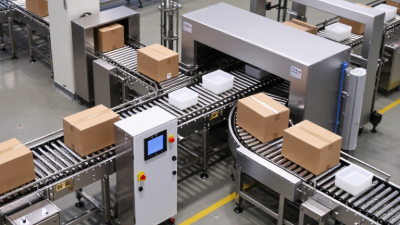
A checkweigher is an in-motion weighing system that checks whether each package falls within a chosen weight range. It usually sits on a production line after filling or packing. The package travels across a short weighing belt, where a load cell measures its weight. The controller compares that reading with preset limits. Simple in principle. Reliable readings still depend on setup.
When a pack crosses the weighing section, its movement and position affect the measurement. The system needs enough space between products to identify each one correctly. If a reading is outside the acceptable range, a signal can activate a reject device or alert an operator. Belt vibration, changing line speeds, and uneven packages may cause inconsistent results. I have seen small setup details matter more than expected; a checkweigher cannot correct an inaccurate target weight or poor filling process.
Tips: Keep the weighing belt clean and stable. Check performance with test weights at the start of a run and after adjustments. Record results over time. If readings drift, inspect the belt, spacing, and product flow before changing settings. The cause is not always obvious.

Who Are the Top Checkweigher Manufacturers in China?
How to Evaluate Checkweigher Manufacturers in China
A reliable evaluation starts with performance evidence, not a polished brochure. Ask for repeatability results at your target speed and product weight, then check them using your own samples. OIML R 51-1:2006 sets accuracy classes for automatic catchweighers, including class X and class Y. Request the proposed machine’s class, test conditions, and calibration records. A result without belt speed, sample size, and product details is hard to compare.
Inspect the equipment closely. Can operators clean the conveyor without tools? Does the reject mechanism remove a 500-gram pouch cleanly without disturbing nearby products? Ask for a factory acceptance test using real packaging, followed by a written service response time and spare-parts list. ISO 9001 certification can support confidence in quality processes, but it does not prove weighing accuracy. That distinction is easy to miss.
Tips: Send identical samples to shortlisted suppliers. Compare results at the same line speed, and ask to see raw test data—not only a pass certificate. Keep one awkward product in the test; perfect samples can hide real production problems.
| Evaluation Dimension | What to Check | Evidence to Request | How to Compare Suppliers |
|---|---|---|---|
| Application fit | Confirm the product type, target weight range, package dimensions, conveyor conditions, and production environment the proposed system is designed to handle. | A written application review using representative product samples and the buyer’s operating requirements. | Compare proposals against the same product and operating conditions; do not rely on a general-purpose specification alone. |
| Throughput and weighing performance | Check the quoted line speed and weighing results for the actual product, package, spacing, and conveyor setup. Dynamic weighing performance can depend on these conditions. | Test results or a demonstration using representative products, with the test conditions and acceptance criteria recorded. | Compare results at the required production speed and under equivalent test conditions. Avoid comparing speed figures without their conditions. |
| Weighing range and resolution | Review the instrument’s usable weighing range, displayed increment, and suitability for the product’s target weight and tolerance. | Technical documentation showing the weighing range and scale interval, plus product-specific test results. | Check that the proposed range and increment meet the application; a smaller displayed increment by itself does not establish better in-line performance. |
| Accuracy and acceptance criteria | Define acceptable weighing performance for the application, including how results are measured and how many products are included in a test. | A test protocol specifying product samples, line speed, environmental conditions, measurement method, and pass/fail limits. | Use the same agreed protocol for each candidate. Treat unsupported accuracy claims as unverified until demonstrated. |
| Legal metrology and standards | Determine whether the checkweigher will be used for regulated weighing or as an in-process quality-control instrument. Applicable requirements depend on the destination market and use. | Relevant conformity or type-approval documentation where required, with the instrument model and scope clearly identified. | Verify documents with the issuing body or appropriate authority and confirm that they cover the intended model and application. OIML R 51 concerns automatic catchweighing instruments; its relevance depends on local rules and intended use. |
| Reject system and product tracking | Check the reject device, reject confirmation, fault handling, and product tracking needed to remove out-of-tolerance packages reliably. | A functional demonstration covering acceptable, underweight, overweight, and reject-fault scenarios where applicable. | Confirm that rejected products can be identified and that alarms or line stops behave as specified in the agreed production workflow. |
| Construction and washdown suitability | Assess frame materials, surface finish, enclosure protection, and cleaning compatibility for the installation environment. | Drawings, material specifications, applicable ingress-protection documentation, and cleaning instructions. | Match the documented protection and materials to the site’s cleaning methods and environmental conditions; do not assume every model is suitable for washdown. |
| Controls and data integration | Identify required connections to the line controller, production systems, or quality records, and confirm the data and signals that must be exchanged. | A supported interface list, communication documentation, and a demonstration or integration test for the required signals. | Compare compatibility with the existing line and verify data handling, alarms, and operating permissions before purchase. |
| Calibration and maintenance | Review calibration procedures, routine checks, maintenance access, spare parts, and any recommended service intervals. | Calibration instructions, maintenance schedule, spare-parts list, and service documentation. | Compare the documented procedures and expected maintenance needs; ensure the site can perform required routine checks. |
| Factory acceptance and commissioning | Agree how the equipment will be tested before shipment and after installation, including performance checks and operator training. | A written factory and site acceptance test plan with responsibilities, test conditions, and acceptance limits. | Prefer proposals that make acceptance criteria explicit and provide documented commissioning and training deliverables. |
| Service and lifecycle support | Clarify technical-support availability, service coverage, spare-parts sourcing, warranty terms, and response commitments. | Written warranty and service terms, support contact process, and any proposed response-time commitments. | Compare contractual commitments and support arrangements for the installation location rather than relying on general assurances. |
| Total cost of ownership | Consider purchase price alongside installation, integration, training, maintenance, spare parts, and expected operating requirements. | An itemized quotation with included and excluded services, options, and recurring costs. | Compare quotations on the same scope and lifecycle assumptions, not on equipment price alone. |
China’s checkweigher leaders are best identified by capability, not by an unsupported sales ranking. UNIDO’s International Yearbook of Industrial Statistics reports that China generated about 31.8% of global manufacturing value added in 2022. That scale supports a broad supplier base, but it does not prove that every local maker leads in checkweighing. A real gap.
For buyers, stronger manufacturers show repeatable accuracy, stable line speeds, and clear test records across product sizes. Ask for trial results using your own packages, including light pouches and rigid cartons. Check rejection timing, calibration procedures, and how operators review weight trends on screen. These details matter on a fast production line. Small errors add up.
The strongest suppliers also support integration with conveyors, inspection equipment, and factory data systems. Industry market reports commonly identify automation and quality control as key checkweigher demand drivers, but published market-share data for Chinese makers is limited. That limitation matters. Compare documented performance, service response times, and spare-part availability rather than relying on broad claims of leadership. A careful factory trial is more informative than a polished brochure.
Chinese checkweigher manufacturers can differ in weighing ranges, line speeds, frame materials, and software options. One model may suit small cartons moving slowly, while another is built for heavier packs on a faster conveyor. Ask how the machine handles product spacing, belt changes, and rejected items. Those details affect daily operation. That matters.
Service varies, too. Some suppliers offer remote troubleshooting and operator training; others can provide more hands-on commissioning. Check what is included, how spare parts are supplied, and whether the interface supports your team’s working language. A factory acceptance test using your actual products can reveal unstable readings or awkward product transfers. A brochure cannot show everything.
Tips: Bring sample packs and target speeds to a technical discussion. Request test results across several weights, not just one ideal run. Also ask who responds when a fault appears during a shift. Small details count.
A careful comparison should include accuracy, throughput, cleaning access, and integration with upstream and downstream equipment. Stainless-steel surfaces may help with routine cleaning, but the right design depends on the product and environment. I would not choose on price alone; still, the most feature-rich machine is not automatically the best fit. Check the proposed specifications against your real line conditions, and note any assumptions that remain untested.
Choosing a Chinese checkweigher manufacturer starts with the product, not the brochure. Ask for test results using packages close to yours in weight, size, and surface condition. A 250-gram pouch and a rigid carton can behave very differently on a fast line. Check weighing accuracy at your required speed, reject timing, and changeover time. Ask how often calibration is needed, and what support is available when readings drift. Small details matter. OIML R 51-1:2023 sets technical and metrological requirements for automatic catchweighing instruments; buyers can use it as a reference when reviewing performance claims.
Integration deserves equal scrutiny. Request a live demonstration with your conveyor, packaging format, and production data, rather than relying only on a factory sample. Confirm how the unit shares results with existing line controls and records faults or weight trends. Deloitte and MAPI’s 2019 Smart Factory Study found that 86% of surveyed manufacturers expected smart factory initiatives to drive competitiveness within five years. That makes usable data and dependable service practical selection criteria, not extras. Ask for response-time commitments, spare-parts availability, and references from comparable installations. A low quote can still be a false economy. I would also check the acceptance test in writing; vague criteria are easy to regret later.