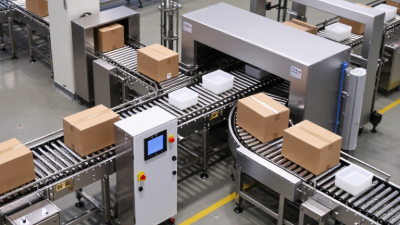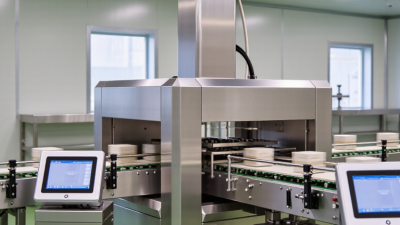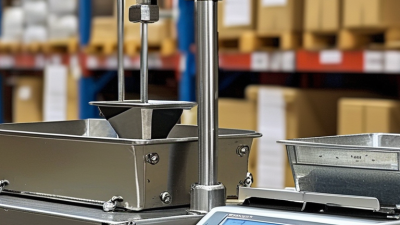
China has become a major sourcing base for automated weighing and packaging equipment. For global buyers, selecting reliable Roller Checkweigher suppliers requires more than comparing prices. It requires evidence.
The global industrial weighing equipment market remains substantial and continues expanding, according to Grand View Research’s industry analysis. MarketsandMarkets also identifies automation, connected production, and quality control as important growth drivers in food and manufacturing equipment. These trends explain the rising interest in Chinese Roller Checkweigher manufacturers. Modern lines need stable weighing at high speed, often beside conveyors carrying cartons, trays, or sealed pouches.
Performance must be measurable. Buyers should examine weighing accuracy, belt or roller speed, load-cell design, reject response time, and software traceability. OIML R 51 provides an important reference for automatic catchweighing instruments. ISO 9001 certification can support process control, but certification alone cannot prove machine reliability. Factory audits, sample testing, calibration records, and after-sales response remain essential.
Small details matter.
A well-designed machine should handle wet floors, product vibration, and frequent cleaning without unstable readings. Supplier experience with export packaging, installation support, spare parts, and regional voltage requirements also reduces project risk. Reports from PMMI continue to highlight labor pressure and automation investment across packaging operations, yet automation is not always the cheapest answer. Some suppliers may present impressive specifications while offering limited validation data. That weakness deserves attention.
This guide compares leading Chinese suppliers through technical capability, documentation, customization, compliance awareness, and service performance. It does not assume that the largest factory is the best choice. A dependable decision usually comes from verified trials, clear contracts, and realistic production requirements.
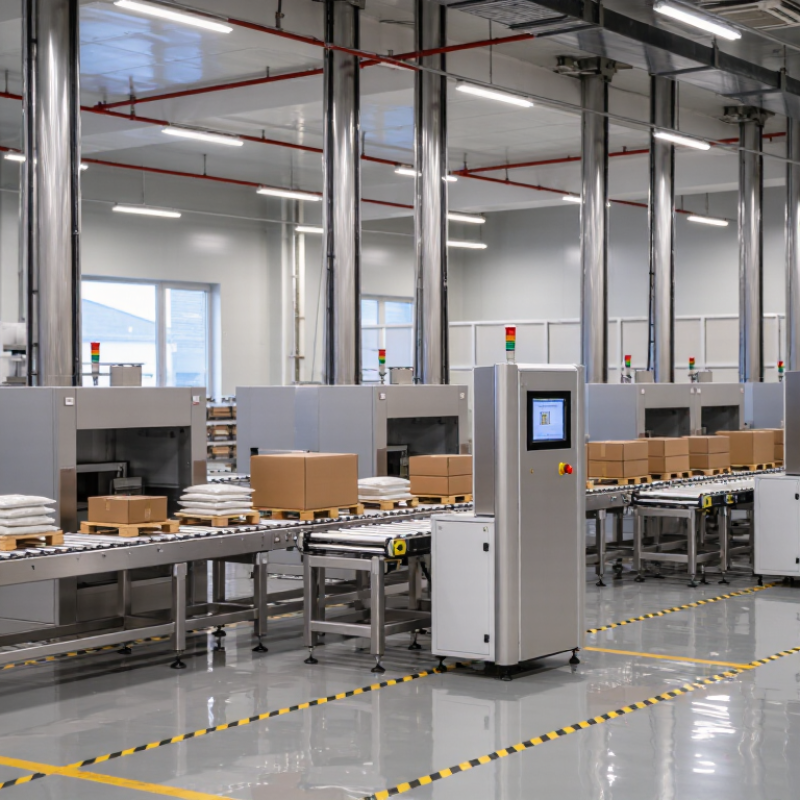
A roller checkweigher is an in-line weighing machine for products moving through a production line. It uses powered rollers to carry boxes, trays, or packaged goods across a weighing section. The system checks each item without stopping the conveyor.
The process is precise but simple. An infeed roller transfers the product onto a load-cell platform. Sensors detect its arrival and measure weight during motion. A controller compares the result with preset minimum and maximum limits. Accepted products continue forward. An air pusher, diverter, or stopping roller removes items outside the target range. Timing matters. A small delay can create a false reading.
Reliable operation depends on more than the load cell. Stable floor conditions, correct belt speed, and accurate tare settings all affect results. Dust, vibration, uneven packages, and wet surfaces may reduce consistency. Factory trials should test real product sizes, speeds, and spacing. Calibration weights should be traceable and checked regularly. No line is perfect. A rushed calibration can create false rejects, while weak sensor alignment may miss them. Global buyers should request test records, wiring details, maintenance guidance, and support for local installation. Clear documentation often reveals more than a polished sales claim.
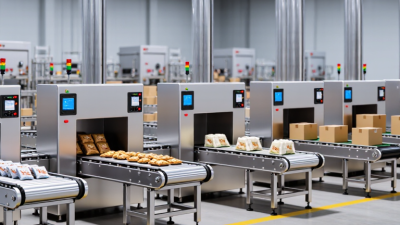
China’s roller checkweigher manufacturing industry combines practical engineering with flexible production capacity. Manufacturers commonly build stainless-steel frames for food, beverage, logistics, and packaged-goods lines. Smooth rollers reduce product jolts during weighing. That detail matters when cartons arrive unevenly spaced.
Modern systems often use high-resolution load cells, PLC controls, touchscreen interfaces, and automatic rejection units. Many factories also offer adjustable conveyor widths and customized line heights. Operators can review weight trends, alarm records, and production counts from one control panel. Calibration procedures should include certified test weights and documented results. Without traceable records, impressive accuracy claims mean little.
Factory acceptance testing remains an important purchasing step. Buyers should examine speed tests, belt or roller alignment, error handling, and cleaning access. Ask for sample-product trials. Real products behave differently. Moisture, vibration, loose packaging, and unstable spacing can reduce performance. China’s supply chain supports competitive pricing and quick customization, but quality consistency still requires inspection. A polished enclosure cannot repair weak software or careless assembly. Some suppliers improve rapidly after technical feedback, while others need closer supervision. That difference deserves attention.
| Evaluation Dimension | Typical Industry Data or Specification | Relevance for Global Buyers |
|---|---|---|
| Primary Application | Dynamic weighing of cartons, parcels, totes, cases, trays, and packaged products while they move on a roller conveyor. | Suitable for logistics hubs, e-commerce fulfillment, warehousing, food processing, and general manufacturing lines. |
| Weighing Capacity | Common configurations cover approximately 0.1–60 kg per item; heavier-duty designs may be engineered for larger loads. | The required capacity should be selected from the product weight range, package dimensions, and conveyor loading pattern. |
| Typical Throughput | Often specified from approximately 20 to 120 items per minute, depending on product length, spacing, belt or roller speed, and required accuracy. | Buyers should request a performance test using actual products rather than relying only on the maximum advertised speed. |
| Displayed Accuracy | Commercial specifications commonly state increments or tolerances such as 1 g, 2 g, 5 g, 10 g, or higher, depending on capacity and application. | Actual accuracy depends on vibration, package stability, conveyor alignment, speed, environmental conditions, and calibration. |
| Conveyor Structure | Roller conveyors may use powered rollers or motorized zones, with modular sections designed for integration into existing material-handling systems. | Powered roller designs are particularly useful for rigid cartons and parcels in automated sorting and distribution lines. |
| Conveyor Width | Working widths are commonly customized to the conveyed product; many industrial systems are built around widths of approximately 300–1,000 mm. | The frame must accommodate the largest package while maintaining stable support across the weighing zone. |
| Product Dimensions | Manufacturers generally configure roller pitch, weighing-zone length, and guide rails according to package length, width, height, and center of gravity. | Accurate dimensional information is essential for preventing package overlap and unstable weighing. |
| Construction Materials | Painted carbon steel is common for general logistics applications; stainless-steel frames and contact parts are widely selected for washdown or hygienic environments. | Material selection affects corrosion resistance, cleaning requirements, service life, and total ownership cost. |
| Ingress Protection | Protection levels such as IP54, IP65, or IP67 may be available depending on enclosure design and application requirements. | The required rating should match dust, moisture, cleaning chemicals, and washdown exposure at the installation site. |
| Load Cell Configuration | Single- or multi-load-cell weighing platforms are used, with the selection based on load distribution, platform size, and mechanical rigidity. | A suitable load-cell arrangement improves repeatability when packages are not perfectly centered. |
| Control Interface | Industrial touchscreens, programmable controllers, recipe management, alarm functions, and multilingual operator interfaces are commonly offered. | A clear interface reduces operator training time and simplifies format changes for different package sizes. |
| Data Connectivity | Depending on the control system, integration may use Ethernet, serial communication, digital I/O, or industrial communication protocols. | Connectivity supports warehouse management, manufacturing execution, traceability, production reporting, and reject confirmation. |
| Reject and Sortation Options | Typical options include stop-and-remove, pneumatic pushers, diverter arms, drop gates, and controlled conveyor routing. | The reject mechanism should be matched to package weight, shape, spacing, line speed, and operator safety requirements. |
| Calibration and Verification | Routine zero checks, test-weight verification, scheduled calibration, and documented maintenance procedures are standard quality-control practices. | Buyers should confirm calibration procedures, test-weight requirements, certificates, and local legal-metrology obligations before commissioning. |
| Electrical Supply | Industrial systems are commonly configured for regional single-phase or three-phase supplies, with voltage and frequency specified during order confirmation. | Electrical compatibility must be checked against the destination country and the buyer’s existing conveyor system. |
| Customization Capability | Common customization areas include conveyor height, roller pitch, frame width, guide rails, weighing range, software language, reject layout, and line interfaces. | China’s equipment manufacturing supply chain commonly supports made-to-order configurations for export projects and automated production lines. |
| Export Documentation | Typical project documentation may include user manuals, electrical drawings, packing lists, inspection records, spare-parts lists, and installation instructions. | Complete documentation helps with customs clearance, installation, operator training, and after-sales maintenance. |
| Buyer Qualification Checklist | Evaluate product testing, load-cell data, control-system details, factory quality procedures, spare-parts availability, warranty terms, and remote-service capability. | A technical and service assessment is more reliable than comparing suppliers only by quoted equipment price. |
Note: Specifications shown are typical industry ranges or commonly available configuration options. Final performance depends on product characteristics, conveyor design, environmental conditions, calibration, and the agreed acceptance test.
Choosing China-based roller checkweigher suppliers requires more than comparing catalog prices. Examine their experience with your product, package weight, roller spacing, and line speed. A supplier should explain how load cells, conveyors, reject systems, and software work together. Request test results using samples similar to your cartons, trays, or sealed packs. Small product changes can affect accuracy.
Tips: Ask for a live factory video or an on-site audit. Check calibration records, inspection procedures, and sample reports. Confirm the stated accuracy at your real operating speed. Also review stainless-steel grades, guarding, cleaning access, and electrical protection. These details matter when equipment runs near moisture, dust, or frequent washdowns. Do not accept vague claims.
Reliable suppliers provide clear drawings, manuals, spare-parts lists, and commissioning plans. They should identify who handles remote support and how quickly technical questions receive answers. Ask for a factory acceptance test before shipment, with agreed limits for accuracy, speed, and rejection timing. Traceable measuring equipment is important. So is honest communication.
Price can mislead. A cheaper machine may require costly changes to your existing line. I once underestimated the effect of uneven carton bottoms; that assumption would have weakened the test. Allow time for installation trials and operator training. Review contract details carefully, including warranty scope, software updates, delivery terms, and documentation language. Suppliers that welcome difficult questions often show stronger engineering discipline. Not always, but often.
This buyer-oriented scoring framework gives the highest weight to weighing accuracy, product quality, and quality-control traceability. Buyers can use these criteria to compare China-based roller checkweigher suppliers consistently before requesting quotations, factory audits, and performance tests.
Global buyers often need more than a standard roller checkweigher. Product weight, package size, conveyor speed, and factory layout can vary widely. Experienced Chinese suppliers should confirm these details before proposing a machine. Customization may include roller width, weighing range, conveyor height, load-cell capacity, reject method, and control-panel language. Small details matter. A poorly matched roller pitch can affect package stability and weighing accuracy.
Reliable quality control should cover the complete production process. Suppliers can inspect frames, motors, sensors, and electrical components before assembly. During factory testing, technicians should use certified test weights across several load points. They should also record repeatability, belt or roller speed, reject timing, and alarm performance. Photos, inspection reports, and a recorded factory acceptance test give buyers useful evidence. Quality claims need proof.
Export support reduces avoidable delays. A dependable supplier should provide installation drawings, wiring diagrams, operating manuals, packing lists, and spare-parts recommendations. Strong wooden crating protects the machine during long-distance transport. Remote commissioning can help engineers adjust sensor sensitivity and reject timing after installation. Yet no supplier gets every project right. Shipping damage, product changes, or unstable power can still create problems. Honest communication and documented corrective actions are more valuable than perfect promises. Clear after-sales response times also help global buyers plan maintenance and production.
Selecting the right roller checkweigher supplier requires more than comparing prices. Start with your product weight, package dimensions, line speed, and cleaning conditions. A machine handling sealed cartons may need different rollers from one handling fragile trays. Fortune Business Insights estimated the global checkweigher market at about USD 290 million in 2023. Its forecast also indicates steady growth through 2032. This suggests increasing demand, but market growth does not guarantee supplier quality.
Ask suppliers for documented accuracy tests using your real products. Request sample reports showing repeatability, rejection timing, belt or roller speed, and error rates. Verify compliance with applicable metrology and food-contact requirements. ISO 9001 certification can support process reliability, but it should not replace factory audits. During a site visit, inspect spare-parts storage, calibration records, and operator training. Small details matter. A clean sensor cable route can prevent costly downtime. I have seen specifications look impressive, while changeover instructions remained vague.
Tips: Compare total ownership cost, not only purchase price. Ask for a factory acceptance test before shipment. Confirm remote support hours and local service coverage. Check whether software records inspection history. Leave room for doubt. A supplier unwilling to share test conditions may create problems later. The best choice is usually the supplier that explains limitations clearly and adjusts the roller system to your line.