Best Dynamic Checkweigher Solutions for Global Suppliers?
In today's fast-paced manufacturing landscape, quality control is paramount. One vital tool is the Dynamic Checkweigher. This equipment ensures products meet weight specifications during production. It helps maintain standards in various industries, from pharmaceuticals to food processing.
Many global suppliers seek efficient solutions for their needs. A reliable Dynamic Checkweigher can boost productivity while reducing waste. However, choosing the right system requires careful consideration. Each production line has unique demands. What works for one supplier may not fit another.
Dynamic Checkweighers enhance accuracy but are not without challenges. Calibration can be complex. Regular maintenance is crucial to ensure optimal performance. Suppliers must weigh their options wisely. Achieving the perfect balance between speed, accuracy, and cost remains a continuous journey.
Best Dynamic Checkweigher Solutions for Global Suppliers
Dynamic checkweighers play a crucial role in manufacturing. They ensure products are within specified weight limits. This is vital for
compliance and customer satisfaction. Many suppliers seek reliable and efficient solutions. The technology must be adaptable to various production lines.
Accurate weight measurement minimizes waste and increases efficiency. However, not all checkweighers perform equally. Some may struggle with speed or precision. Suppliers should consider their specific needs,
like production speed and product type. Understanding these factors can enhance operational efficiency.
Implementing advanced systems can be beneficial. These systems offer real-time data and analytics. Yet, finding the right balance between technology and human oversight is essential.
Too much reliance on automation can lead to unforeseen challenges. Regular maintenance and calibration are necessary to ensure optimal performance.
Overview of Dynamic Checkweighers in Manufacturing Industries
Dynamic checkweighers play a critical role in the manufacturing industries. These machines help ensure products meet weight specifications, which is vital for compliance and quality control. According to a recent industry report, improper weight measurements can lead to substantial financial losses, impacting both reputation and consumer trust. In fact, the global market for dynamic checkweighers is projected to grow by over 6% annually by 2027, reflecting their increasing importance in various sectors.
Dynamic checkweighers offer manufacturers precision and efficiency. They can process high volumes of products quickly, significantly reducing manual labor and human error. However, routine maintenance is essential, as worn parts can decrease accuracy. Investing in training for staff can enhance the effectiveness of these machines. Remember, a comprehensive maintenance schedule is key to avoiding costly downtimes.
When selecting a checkweigher, consider the machine's adaptability. Many industries have unique requirements for weight ranges and speed. Up to 70% of manufacturers report needing different configurations at various times. Thus, flexibility in equipment can lead to better long-term investment. Regular calibration is crucial to ensure the machines maintain their performance. Small adjustments can prevent bigger issues down the line.
Best Dynamic Checkweigher Solutions for Global Suppliers
| Model |
Max Weight Capacity (kg) |
Speed (items/min) |
Accuracy (g) |
Suitable Industries |
| Checkweigher A |
30 |
120 |
0.5 |
Food, Pharmaceuticals |
| Checkweigher B |
50 |
150 |
0.3 |
Beverages, Chemicals |
| Checkweigher C |
20 |
100 |
0.4 |
Cosmetics, Electronics |
| Checkweigher D |
10 |
80 |
0.7 |
Pharmaceuticals, Food |
Key Features to Consider in Dynamic Checkweigher Solutions
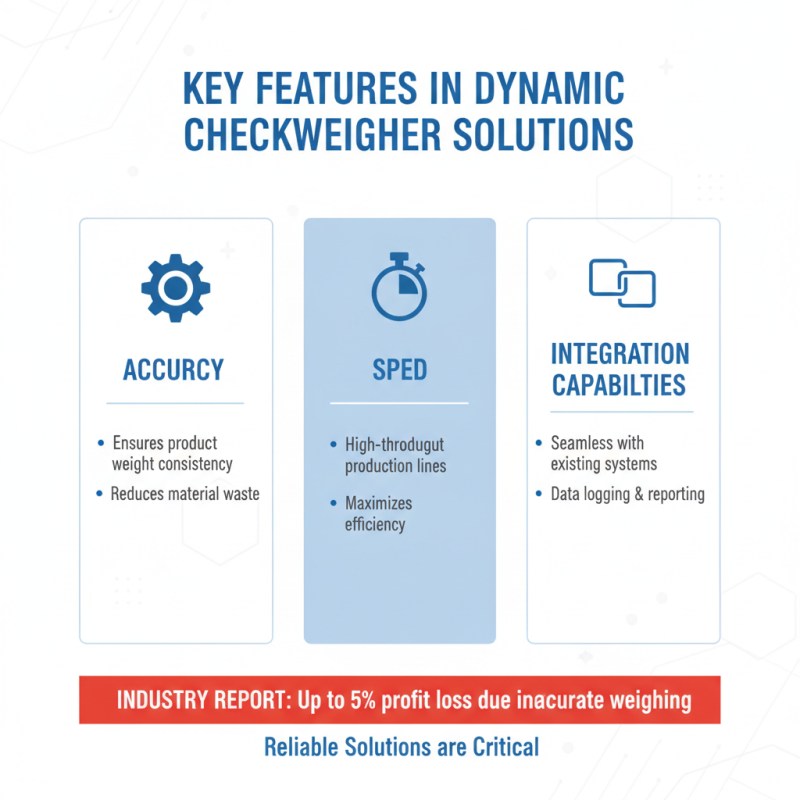
Dynamic checkweighers are essential in manufacturing, ensuring product weight consistency and compliance. Key features include accuracy, speed, and integration capabilities. A recent industry report states that manufacturers lose up to 5% of profit due to inaccurate weighing systems. This highlights the critical need for reliable solutions.
Accuracy is paramount. A good dynamic checkweigher should maintain a precision rate of at least 99.9%. Systems should also adapt to various product types. For example, handling different sizes or weights is crucial in industries like food and pharmaceuticals. Speed is equally important; modern systems can process up to 300 items per minute. This ensures high productivity without compromising quality.
Integration capabilities stand out. Checkweighers must easily connect with other equipment, such as conveyors and data management systems. However, many manufacturers overlook this aspect during selection, leading to inefficiencies. As technology evolves, staying informed about new features becomes vital for optimizing operations. Achieving the right balance between these features can significantly enhance overall performance and compliance in production lines.
Top Dynamic Checkweigher Brands and Their Innovations
Dynamic checkweighers play a crucial role in ensuring product quality across various industries. They provide real-time weighing solutions that help maintain compliance and minimize waste. Leading brands in this field focus on innovation, integrating advanced technologies that enhance speed and accuracy. These devices often feature user-friendly interfaces that simplify the weighing process.
Several companies have introduced notable advancements, such as AI-driven algorithms that enhance precision. Others prioritize sustainability by using energy-efficient components. However, some dynamic checkweighers may still face challenges with scalability and adaptiveness. It’s important for suppliers to assess their unique needs before choosing a solution.
Quality control is key, yet the solutions available might not fit every operation seamlessly. Each brand offers distinct features, but not all are suitable for every product type. Inconsistencies in performance can lead to potential setbacks. Suppliers should be prepared to rethink their choices based on ongoing assessments and feedback. Effective partnerships in this domain hinge on communication and understanding of operational demands.
Best Dynamic Checkweigher Solutions for Global Suppliers
This chart illustrates the market share of various technologies used in dynamic checkweighers among global suppliers, showcasing the innovations that are driving efficiency and accuracy in industrial applications.
Comparative Analysis of Dynamic Checkweighers for Global Markets
In the competitive landscape of manufacturing, dynamic checkweighers play a crucial role. These machines ensure product consistency and quality, making them essential for suppliers worldwide. When evaluating different checkweigher solutions, factors such as speed, accuracy, and adaptability become critical. Each global market has unique requirements, which can complicate the selection process.
Many suppliers may overlook the importance of local regulations when choosing dynamic checkweighers. This can lead to complications, including compliance issues and operational delays. Suppliers often face trade-offs between advanced features and user-friendly interface design. It is essential to strike the right balance to meet market expectations while avoiding unnecessary complexities.
Understanding varying product weights is another layer of consideration. Ideal solutions must accommodate different item sizes and weights without sacrificing precision. Some checkweighers struggle to maintain accuracy when faced with diverse product lines. Ultimately, suppliers should prioritize solutions that deliver reliability and adaptability in a fluctuating market. Finding the right dynamic checkweigher requires careful assessment and reflection on both current and future needs.
Conclusion
Dynamic Checkweighers play a crucial role in the manufacturing industries by ensuring product weight accuracy and compliance with regulations. These advanced systems are designed to provide real-time weight verification, enhancing quality control and efficiency on production lines. Key features to consider when selecting a dynamic checkweigher include speed, precision, ease of integration, and data analysis capabilities, which can significantly impact operational performance.
As the demand for high-quality products grows, dynamic checkweigher technology continues to evolve with innovations such as enhanced sensitivity, AI-driven analytics, and improved user interfaces. Future trends in this field suggest a shift towards greater automation and connectivity, enabling manufacturers to streamline processes and enhance data-driven decision making. Overall, dynamic checkweighers remain essential tools for global suppliers aiming to meet market demands while ensuring compliance and maximizing productivity.