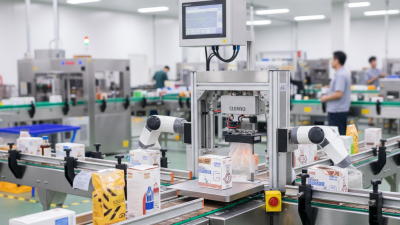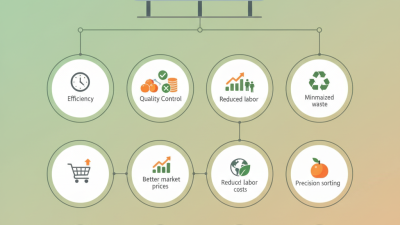
In today's fast-paced industrial environment, utilizing a Checkweigher Online has become essential for many businesses. This technology ensures that products meet weight specifications, enhancing both quality control and compliance. However, many overlook its full potential. Effective online use can lead to improved efficiency and reduced waste.
Many users often struggle with setup and integration. It’s crucial to familiarize yourself with the software interface and calibration methods. Regular training can help staff avoid common mistakes. Additionally, the accuracy of a Checkweigher Online depends on proper maintenance. Neglecting routine checks can lead to inconsistent results, challenging reliability.
Another key point of consideration is data management. Proper analysis of weighed data can reveal valuable insights. Companies frequently fail to utilize these insights effectively. Ignoring trends can impact production quality. Therefore, investing time into understanding how to interpret the data is vital. This can elevate your operations and provide a competitive edge in the market.

Checkweighing technology plays a vital role in various industries, from food production to pharmaceuticals. Accurate weight measurement ensures product quality and compliance with regulations. A report published by the International Society of Automation highlights that precision in checkweighing can reduce product waste by up to 10%. This is significant as it not only saves costs but also minimizes environmental impact.
Understanding checkweighing technology involves recognizing its key components. These typically include load cells, controllers, and user interfaces. Load cells convert weight into electrical signals. Controllers interpret these signals and display the results. User interfaces allow operators to easily navigate the system. However, improper calibration can lead to errors. According to the International Journal of Advanced Manufacturing Technology, nearly 30% of weight discrepancies arise from device miscalibrations.
Effective use of checkweighers also means being aware of operational challenges. Factors like vibrations and temperature changes can affect accuracy. Regular maintenance and checks are paramount. Data suggests that more than 40% of industrial errors occur during high-speed operations, where checkweighing might be compromised. Continuous training of staff in handling equipment can mitigate some of these issues, ensuring more reliable outcomes in production lines.
| Tip Number | Tip Description | Benefit | Implementation Notes |
|---|---|---|---|
| 1 | Ensure calibration before use. | Accurate measurements. | Calibrate daily or after significant changes in the environment. |
| 2 | Use appropriate weights for the checkweigher. | Optimal weighing performance. | Refer to the manual for weight specifications. |
| 3 | Set proper tolerance levels. | Reduced false rejects. | Adjust based on product weight variations. |
| 4 | Regular maintenance checks. | Longer equipment lifespan. | Schedule maintenance quarterly. |
| 5 | Train operators thoroughly. | Error reduction. | Conduct training sessions regularly. |
| 6 | Utilize software for data analysis. | Identifying trends and issues. | Choose compatible software options. |
| 7 | Monitor environmental conditions. | Consistency in measurements. | Install humidity and temperature controls. |
| 8 | Keep the weighing area clean. | Prevent product contamination. | Implement a cleaning schedule. |
| 9 | Perform routine inspections. | Identify and rectify issues timely. | Check for wear and tear regularly. |
| 10 | Document all checkweighing processes. | Easier compliance and audits. | Maintain accurate and up-to-date records. |
When selecting an online checkweigher, focus on key features to maximize performance.
Accuracy is crucial. A checkweigher must provide precise measurements to ensure product consistency. Look for systems that can detect minute weight variations. This is especially important in industries like food processing and pharmaceuticals, where even slight discrepancies affect quality.
Speed is another vital feature. An efficient online checkweigher should process items swiftly without compromising accuracy. Systems offering adjustable conveyor speeds can adapt to different production rates. Additionally, consider user-friendly interfaces. A clear display and intuitive controls can reduce training time and errors.
Integration capabilities deserve attention as well. A good checkweigher should seamlessly connect with existing production systems. This enhances data flow and improves overall efficiency. Regular calibration and maintenance checks are required for reliability. A checkweigher can only perform well if it’s consistently maintained. Investing in training for staff can further ensure that the equipment is used effectively, minimizing human errors. Balancing all these factors can enhance productivity while maintaining quality.
Compliance with weighing regulations is crucial for industries that rely on checkweighers. Data from the International Organization of Legal Metrology indicates that non-compliance can lead to significant financial losses. An estimated 10% of products may be misweighed, resulting in wasted resources and consumer distrust. Regular audits and adherence to standards such as ISO 9001 can help organizations avoid these pitfalls.
Moreover, effective compliance requires a deep understanding of local regulations. For instance, the Food and Drug Administration (FDA) has stringent requirements for food packaging weights. Any deviation can lead to fines and product recalls. Industry reports suggest that 30% of businesses overlook these regulations, putting their operations at risk.
Implementing advanced software solutions can bolster compliance efforts. These tools help monitor weight accuracy in real-time. Yet, some companies still rely on outdated methods, creating gaps in data integrity and compliance. Emphasizing ongoing training for staff is equally essential. Knowledgeable employees can bridge these gaps and enhance overall operational efficiency. Despite these resources, achieving total compliance remains a challenge for many.
Real-time monitoring is crucial for optimizing checkweigher operations. Integrating data effectively can maximize your workflow efficiency. Start by ensuring your checkweigher systems connect with production software. This allows immediate access to weight data. You can spot discrepancies swiftly, reducing waste and improving quality control.
Utilizing dashboards enhances visibility across operations. A well-designed dashboard provides insights at a glance. It displays real-time data, making it easy to track performance. However, it's important to address potential data discrepancies. Routine checks and validations ensure accuracy over time.
Consider training your team on data interpretation. Understanding the data enhances decision-making. Without this knowledge, the data's value diminishes. Monitor how team members utilize data insights. Regular feedback sessions can highlight areas for improvement. This not only aids in process optimization but also cultivates a culture of continuous learning.
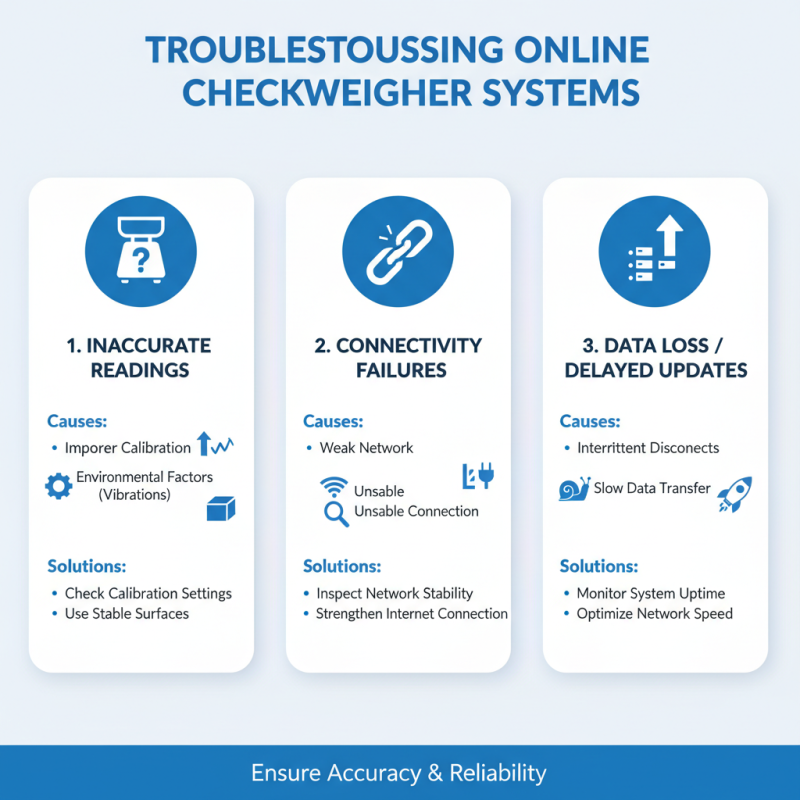
When using online checkweigher systems, troubleshooting common issues can be vital for ensuring accuracy. One frequent problem is inaccurate readings. This might arise from improper calibration or environmental factors, like vibrations. Regularly check calibration settings and use stable surfaces. Another issue is connectivity failures. If the system frequently disconnects, inspect network stability. A weak internet connection can lead to data loss or delayed updates.
Users often overlook dust and debris accumulation on scales. Regular cleaning helps maintain functionality. A neglected checkweigher can produce erroneous data over time. Additionally, software glitches can disrupt operations. Ensure that the system is updated regularly to enhance performance. Users occasionally find themselves confused by error messages. Take the time to understand these notifications; they often provide insights into specific malfunctions. Testing different scenarios can also reveal underlying issues, allowing for more efficient operation. Adopting these practices will improve reliability and accuracy.