Leave Your Message
Choosing a Combination Weighing Machine is a practical decision, not merely a comparison of stainless-steel frames and touchscreen controls. The right system must protect product quality, reduce giveaway, and maintain stable output during demanding production shifts. A machine weighing snack foods, frozen vegetables, or confectionery faces different handling challenges. Product shape, moisture, stickiness, speed, and target weight all matter.
Industry data makes this choice more important. The UNEP Food Waste Index Report 2024 estimated that 1.05 billion tonnes of food were wasted in 2022. Earlier, the FAO’s State of Food and Agriculture 2019 reported that approximately 14% of food was lost between harvest and retail. Accurate portioning cannot solve every source of waste. It can, however, limit overfilling at a critical production stage. Small errors become expensive when repeated across thousands of packs.
Performance should also be judged against recognized measurement principles. OIML Recommendation R 61 addresses automatic gravimetric filling instruments, including accuracy and verification considerations. These references provide a stronger foundation than a supplier’s sales brochure. Still, specifications can look impressive on paper. A high-speed claim may weaken with sticky product or frequent recipe changes. That part is often underestimated.
This guide presents ten practical tips for selecting a Combination Weighing Machine. It considers accuracy, speed, product compatibility, sanitation, software, maintenance, integration, and after-sales support. The best choice is rarely the most powerful machine. It is the one that performs reliably on your product, in your real factory, every day.
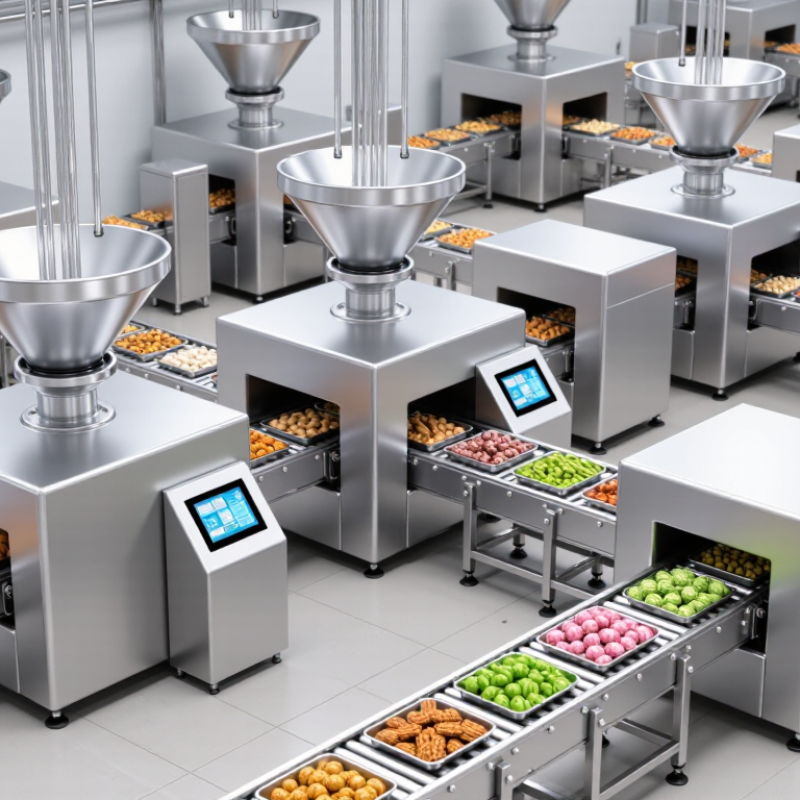
10 Tips for Choosing a Combination Weighing Machine?
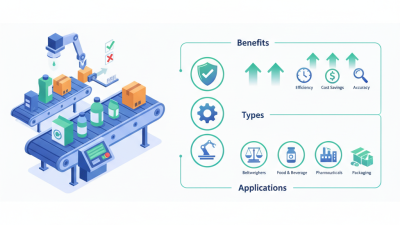
Understanding Combination Weighing Machine Types and Applications
Choosing the right machine starts with understanding how each type handles a product. Multihead weighers use several hoppers and calculated combinations to reach the target weight quickly. They suit snacks, frozen vegetables, confectionery, and other free-flowing products. Linear weighers feed product into fewer weighing channels. They are often suitable for simple products, lower speeds, or gentle handling. Combination systems with special feeding devices can manage irregular pieces, fragile items, or sticky materials, but performance depends heavily on product behavior.
Check ten practical points before selecting equipment: target weight, speed, accuracy, product shape, moisture, density, fragility, contact materials, cleaning needs, and available floor space. A 500-gram snack pack may require different hopper sizes from a 2-kilogram frozen-food pack. Small test runs reveal problems that brochures often hide. Watch for bridging, clinging, uneven feeding, and product breakage. Measure actual outputs, not only advertised capacity. Ask for weighing data across several production batches.
Application conditions matter as much as machine type. Stainless steel construction supports frequent washdown, while dry products may need dust-control features. Fresh produce can require wider chutes and gentler discharge. Powdery products are more difficult and may need auger-assisted feeding. Integration with a bagger, metal detector, or checkweigher should be confirmed early. A perfect match is rare. Even experienced teams sometimes underestimate cleaning time or changeover work. That mistake can quietly reduce real production capacity. Reliable decisions come from product trials, documented measurements, and operators’ feedback.
| No. | Selection Tip | Relevant Machine Type | Typical Applications | Practical Data or Specification | Why It Matters | Main Limitation |
|---|---|---|---|---|---|---|
| 1 | Match the machine to the product form | Linear, multihead, volumetric, or combination weigher | Snacks, frozen food, grains, confectionery, powders, and irregular pieces | Multihead models are generally suited to free-flowing solid products; linear systems are often used for simpler or lower-speed weighing tasks. | Product shape, flowability, stickiness, and density strongly influence accuracy and feed performance. | One machine design cannot handle every product equally well. |
| 2 | Define the target weight range | Multihead or linear combination weigher | Small snack packs, medium food bags, and larger bulk portions | Common commercial applications may range from approximately 10 g to 5 kg per pack, depending on machine configuration. | A suitable load-cell capacity helps maintain accuracy without unnecessarily reducing speed. | Very large target weights may require larger hoppers or a different dosing system. |
| 3 | Prioritize accuracy requirements | Net-weighing combination weigher with digital load cells | Retail food, pharmaceuticals, nutraceuticals, and high-value products | Actual performance depends on product and setup; many systems are designed for gram-level or sub-gram resolution in suitable ranges. | Higher accuracy reduces giveaway, which is especially important when the product has a high unit cost. | Accuracy can decline when products are wet, sticky, inconsistent, or poorly fed. |
| 4 | Compare required production speed | High-speed multihead combination weigher | Continuous snack, frozen food, produce, and confectionery lines | Depending on product, target weight, number of heads, and packaging equipment, commercial systems may deliver dozens to well over 100 weighments per minute. | The correct speed prevents the weigher from becoming a bottleneck in the packaging line. | Maximum advertised speed is not always achievable with fragile or difficult products. |
| 5 | Evaluate the number of weigh heads | Multihead weigher with multiple independent hoppers | High-volume products requiring frequent target combinations | Commercial machines commonly use configurations such as 10, 14, 16, 20, or more heads. | More heads create more possible weight combinations and can improve the balance between speed and accuracy. | Additional heads increase equipment cost, footprint, and cleaning requirements. |
| 6 | Check contact-part materials | Stainless-steel food-grade weigher | Meat, seafood, dairy, fresh produce, and other hygienic applications | Food-contact surfaces are commonly manufactured from corrosion-resistant stainless steel, often including grade 304; more corrosive environments may require other grades. | Appropriate materials support sanitation, durability, and compliance with applicable food-contact requirements. | Higher-grade materials and hygienic construction may raise the purchase price. |
| 7 | Consider washdown and sanitation needs | Water-resistant or washdown-rated combination weigher | Wet, chilled, oily, or sticky products | Look for sloped surfaces, removable contact parts, sealed electrical enclosures, and a documented ingress-protection rating appropriate to the cleaning method. | A hygienic design reduces residue accumulation and shortens cleaning time. | Not every water-resistant machine is suitable for high-pressure or chemical cleaning. |
| 8 | Assess product handling and fragility | Gentle-feed multihead or combination weigher with adjustable vibration | Chips, biscuits, berries, fresh produce, and delicate confectionery | Adjustable feeder amplitude, product-friendly chutes, and controlled discharge help reduce breakage and bruising. | Protecting product quality can be more important than reaching the highest possible cycle rate. | Gentler handling may reduce throughput and require additional equipment space. |
| 9 | Verify integration and control functions | PLC-compatible combination weigher with touchscreen control | Automated vertical, premade-pouch, tray, and multi-lane packaging lines | Useful functions include recipe storage, alarm history, remote diagnostics, reject control, and communication with upstream and downstream equipment. | Good integration helps synchronize feeding, weighing, bag making, sealing, and inspection. | Advanced controls require proper commissioning, training, and maintenance support. |
| 10 | Calculate total ownership cost | Modular machine sized for current and planned production | Small workshops, contract packers, and expanding industrial operations | Compare purchase price, installation, utilities, labor, cleaning time, spare parts, calibration, downtime, and expected product giveaway. | A lower initial price may lead to higher operating costs if the machine is slow, difficult to clean, or frequently unavailable. | Oversizing the machine can create unnecessary capital and maintenance expenses. |