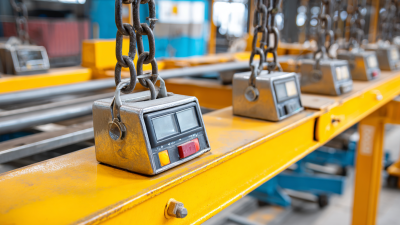
Choosing the right Belt Counterweight Scale begins with understanding the material, conveyor, and operating environment. A scale may appear accurate during commissioning, yet perform differently when dust covers the rollers or moisture changes the material profile. Small errors can become expensive across thousands of tonnes.
The International Energy Agency reported that global coal demand reached approximately 8.5 billion tonnes in 2022 and remained near record levels through 2025 in its Coal 2023 analysis. This scale of movement explains why reliable bulk-material measurement matters. The U.S. Geological Survey’s Mineral Commodity Summaries also shows the continuing importance of mineral production worldwide. In these industries, a few percentage points of measurement error can affect inventory, production reporting, maintenance planning, and customer billing.
This guide presents seven practical tips for selecting a Belt Counterweight Scale. It considers belt width, conveyor speed, loading conditions, counterweight design, idler alignment, calibration, and service access. Look closely.
Technical guidance from the Conveyor Equipment Manufacturers Association and measurement principles reflected in NIST Handbook 44 support a disciplined approach to installation and verification. However, no report can predict every site condition. I would not pretend that one scale design fits every conveyor. A wet limestone line, a fast coal conveyor, and a dusty aggregate plant create different risks. The best choice combines manufacturer data, site measurements, trial experience, and realistic maintenance expectations. A technician standing beside the discharge point often notices problems that a specification sheet misses. That detail deserves attention.

A reliable belt counterweight scale starts with the material, not the scale housing. Record bulk density, moisture, particle size, temperature, and flow behavior. Powder may bridge, while wet aggregate can cling to the belt. These differences change loading stability and weighing accuracy. I have seen a design fail because its test material was dry, but production material arrived damp. Define the real material.
Then examine the conveyor in operating conditions. Measure belt width, speed range, inclination, trough angle, idler spacing, and counterweight tension. Note transfer points, vibration, dust, and nearby equipment. A scale needs a stable belt section with consistent loading. Short conveyors can be especially difficult. The belt may accelerate before the load settles.
Set measurable weighing requirements before selecting components. State expected minimum and maximum flow, target accuracy, available calibration space, and required data output. Check whether the system must monitor totalized mass, instantaneous flow, or both. Include start-up and shutdown behavior. These periods often create misleading readings. They matter.
Calibration access deserves practical attention. Test weights, certified chains, or material tests may suit different installations. Verify the method against site conditions and maintain traceable records. Temperature changes and belt stretch can shift results over time. Schedule inspections, but do not assume a fixed interval will fit every conveyor. Real operation may prove that assumption wrong. Recheck after maintenance, belt replacement, or counterweight adjustment.
Choosing a belt counterweight scale starts with matching the scale type to the conveyor’s work. A continuous belt scale measures material as it moves, making it suitable for steady production lines. A weigh feeder adds controlled feeding, but usually costs more and requires tighter maintenance. Impact scales can handle irregular loading, though their readings may vary when material strikes unevenly. I have found that a simple design often performs better than an advanced system in dusty, busy areas.
Accuracy depends on more than the sensor. Belt alignment, idler condition, tension, speed changes, and material flow all influence the result. Look for a stated accuracy range under real operating conditions, not only laboratory figures. A calibration routine should include test weights or a verified material check. Small errors become expensive.
Capacity needs careful comparison. Check both the minimum flow and the peak hourly load. A scale rated only for maximum capacity may respond poorly to light loads. Conversely, an undersized unit can overload sensors and drift. Leave practical headroom, perhaps 15 to 25 percent, when feed rates fluctuate. That estimate is not universal. Your belt width, incline, moisture, and material density still matter. I once underestimated wet material buildup; the scale remained functional, but the readings needed frequent correction.
7 Tips for Choosing a Belt Counterweight Scale
Choosing a belt counterweight scale starts with the conveyor, not the catalog. Measure belt width, speed, trough angle, load range, and counterweight travel. Inspect the splice, belt cleaners, skirt seals, and return rollers. Each contact point can disturb tension and create unstable readings. Small errors become expensive. Field inspections often reveal a simple mismatch: the scale fits the belt, but not its loading conditions. Match the weigh bridge and load cells to minimum and maximum flow. NIST Handbook 44, 2025 edition, identifies 0.25% and 0.5% accuracy classes for belt-conveyor scale systems.
Tip: verify counterweight compatibility. The gravity take-up must provide stable tension across the operating range. Check its travel, pulley alignment, belt mass, and structural capacity. A scale installed too close to a moving take-up can experience changing forces. That problem is easy to miss. Review the conveyor layout before ordering hardware. CEMA belt-conveyor design guidance also highlights the importance of controlled belt tension, aligned idlers, and consistent material loading.
Tip: treat installation as part of measurement accuracy. Choose a straight, rigid conveyor section with minimal vibration. Confirm enough space for calibration weights, inspection access, and safe maintenance. Protect cables from moisture, dust, and moving components. I would not treat a clean first test as proof. Temperature, moisture, belt buildup, and uneven feeding can change results later. Record zero readings, test loads, belt speed, and material flow during commissioning. This evidence supports reliable verification and exposes installation weaknesses before they affect production records.
Calibration should be practical, traceable, and easy to repeat. Ask whether the scale supports zero and span checks under normal operating conditions. Test weights should have documented values and suitable accuracy. A technician should also verify belt alignment, speed, and material flow during testing. Small errors multiply. Do not guess.
Maintenance access matters as much as measurement performance. Choose a design with reachable load cells, protected cables, and simple inspection points. Review the recommended calibration interval and spare-part availability before installation. Dust buildup can affect moving parts and weighing signals. Material may also collect around the counterweight. I have seen minor cleaning problems become larger accuracy issues.
The operating environment deserves close attention. For dusty areas, look for sealed enclosures, protected connectors, and effective cable glands. In wet locations, corrosion-resistant materials and proper drainage are important. Temperature changes, vibration, and condensation can cause measurement drift. Ask how the system compensates for these conditions. Environmental ratings should match the actual site, not an ideal test room. Grounding and electrical protection also deserve inspection. One overlooked cable can weaken a reliable installation. Regular records help reveal patterns, although many teams record too little. That gap is worth correcting.
A belt counterweight scale should be judged by total cost, not its purchase price. Include installation, calibration, spare parts, software updates, training, and downtime.
Ask the supplier for documented accuracy tests, calibration procedures, and response times.
NIST Handbook 44 provides recognized requirements for belt-conveyor scale testing and performance verification. A capable supplier should explain these requirements clearly, not hide behind technical language.
Request a three-year cost model. Include technician travel, replacement sensors, inspections, and production losses. Small fees become expensive.
Long-term reliability also depends on the site. Dust, vibration, moisture, and uneven loading can distort readings. Choose a counterweight scale with accessible adjustment points and clear diagnostic records. Supplier support should include commissioning and practical operator training. Cheap equipment can still work well. Sometimes, it does not. Field conditions are rarely as clean as the quotation suggests. Recheck the assumptions after six months, because the original estimate may be wrong.