How to Choose the Best Belt Counterweight Scale for Your Needs?
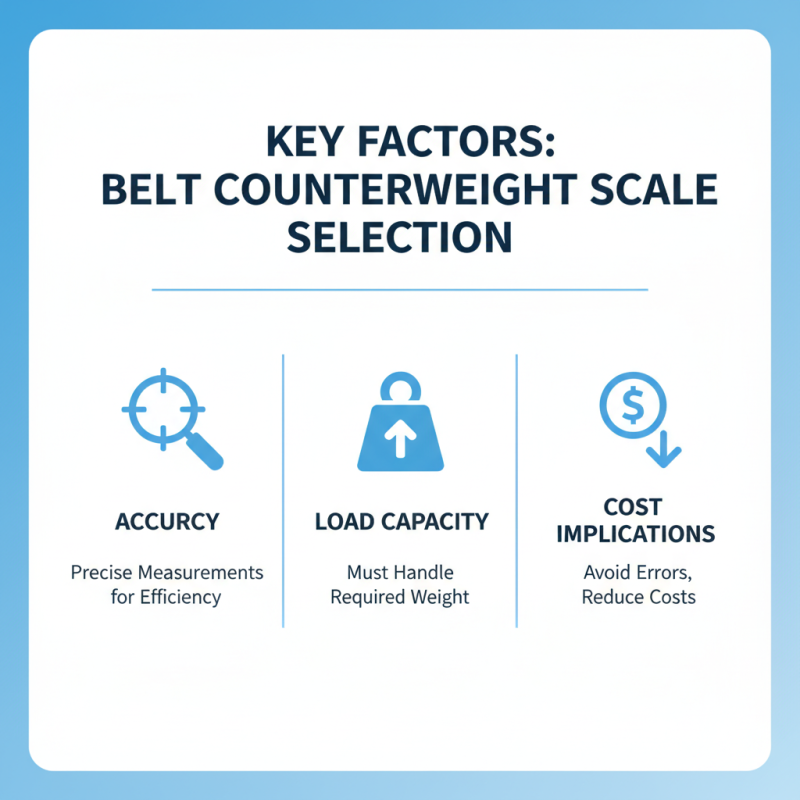
Choosing the right Belt Counterweight Scale can significantly impact your operation's efficiency. A suitable scale ensures accurate measurements, leading to better loads and enhanced productivity. It is essential to consider your specific weighing needs before making a decision.
Different industries have unique requirements. For instance, a manufacturing plant may need a heavy-duty scale, while a warehouse might prioritize portability. Understanding these distinctions is crucial. The cost may also influence your choice. While more expensive models often offer advanced features, budget-friendly options can still meet basic needs effectively.
Another factor to reflect on is maintenance. Regular checks ensure longevity and accuracy. Poorly maintained scales can lead to costly errors. Look for models with robust support or easy repair options. Ultimately, while many scales are available, personal research will lead you to the best Belt Counterweight Scale suited for your demands. Engaging with experienced users can provide deeper insights.
Understanding the Basics of Belt Counterweight Scales in Industry
Belt counterweight scales play a crucial role in many industrial applications. They measure the weight of materials on a conveyor system, providing essential data for efficient operation. According to a report by the International Society of Automation, nearly 30% of operational losses in the manufacturing sector stem from inaccurate weight measurements. This highlights the importance of selecting the right scale for your specific needs.
Understanding how these scales work is vital. They utilize a load cell to detect weight changes as materials pass over them. The accuracy of these scales can impact production efficiency. A recent study indicated that implementing precise weighing systems could improve overall productivity by up to 15%. However, not all scales are designed equally; considerations include scale capacity, installation requirements, and environmental factors.
Many industries, like mining and food processing, rely heavily on accurate weight measurements. Yet, improper installation or maintenance can lead to errors. Data shows that 20% of scale inaccuracies arise from user error. Regular training and calibration are necessary to mitigate such issues. It is essential to assess your operational needs critically, as every detail, from the tension of the belt to the scale's placement, can influence performance.
Comparing Different Types of Belt Counterweight Scales: A Detailed Analysis
When selecting a belt counterweight scale, understanding its types is crucial. There are several models available tailored for different applications. Each has unique features that address various industrial needs. For instance, some scales focus on accuracy, while others may prioritize speed. Evaluating your operational requirements is essential to select the right scale.
In various environments, the choice can significantly affect efficiency. Digital scales offer precise readings but may require more maintenance than mechanical types. You might find that mechanical scales are easier to operate. However, their accuracy can vary based on usage. This inconsistency may lead to potential errors that need careful monitoring.
Considering the operating environment is vital. Dust, moisture, or extreme temperatures may impact performance. Not all scales handle such conditions well. Reflect on your setup to prevent unnecessary issues. Assessing user feedback and technical specifications improves your decision-making process. Balancing all these aspects ensures you choose a scale that aligns with your operational demands and minimizes risks.
How to Choose the Best Belt Counterweight Scale for Your Needs?
| Type |
Capacity |
Accuracy |
Speed |
Price Range |
| Electromechanical |
Up to 500 kg |
±0.1% |
Medium |
$1,000 - $2,000 |
| Digital |
Up to 1,000 kg |
±0.05% |
Fast |
$2,000 - $4,000 |
| Hydraulic |
Up to 2,000 kg |
±0.1% |
Medium |
$3,000 - $6,000 |
| Wireless |
Up to 800 kg |
±0.02% |
Very Fast |
$2,500 - $5,000 |
| Mechanical |
Up to 300 kg |
±0.5% |
Slow |
$500 - $1,000 |
Analyzing Accuracy and Precision Metrics for Belt Counterweight Scales
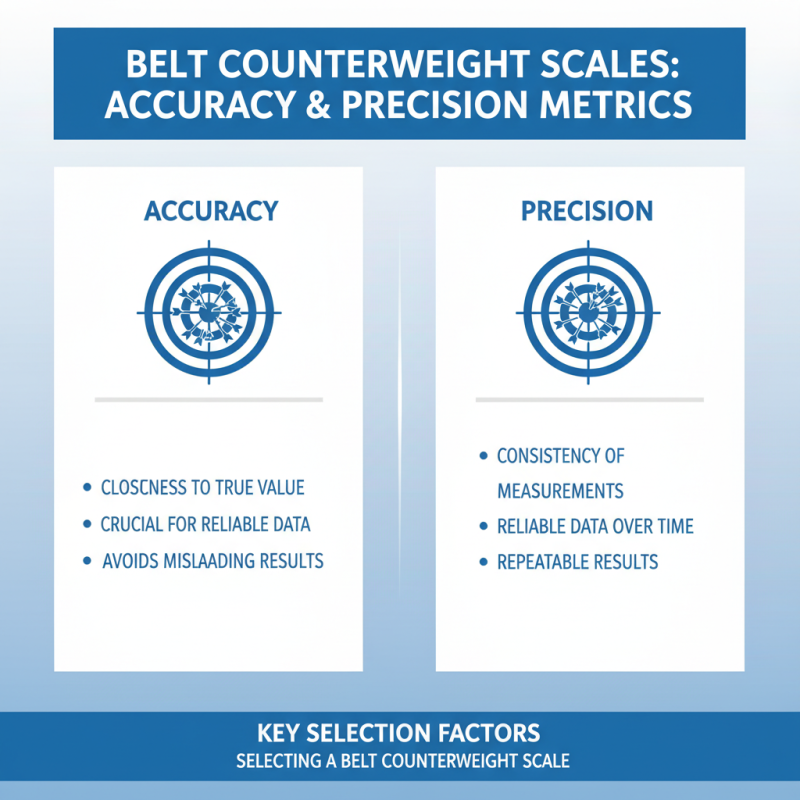
When selecting a belt counterweight scale, accuracy and precision are crucial. Accuracy refers to how close measurements are to the true value. If accuracy is compromised, even the best equipment can produce misleading results. Precision, on the other hand, indicates consistency in measurements. You want a scale that can deliver reliable data over time.
Consider the environment where the scale will be used. Humidity and vibrations can affect performance. Look for features like sturdy construction and protective coatings. These will enhance adaptability to challenging conditions. Always review technical specifications and consult with professionals if needed. This ensures you understand the metrics that matter.
Tips: Always compare multiple models before deciding. Read user reviews to grasp real-world accuracy. Don't overlook the importance of calibration. Regularly maintaining your scale is key to preserving its reliability. Reflect on your specific needs, as they may evolve over time. Avoid settling for the first option you find; take your time to choose wisely.
Evaluating Manufacturer Specifications and Industry Standards for Scales
When selecting a belt counterweight scale, understanding manufacturer specifications is crucial. Each scale comes with unique features designed for specific tasks. Look for details like weight capacity, accuracy, and calibration methods. These factors directly impact your measuring efficiency. A scale that meets these specifications ensures reliable performance in various industries.
Industry standards also play a significant role. Compliance with standards ensures that the scale adheres to regulations. It reassures users about the scale's accuracy and repeatability. However, not all scales meet the same criteria. Therefore, verify if the scale complies with local and international standards. If in doubt, consult experts familiar with weighing technology.
It's important to recognize that even well-rated scales may have limitations. They might perform differently based on the environment. Consider factors like temperature and humidity, which can affect results. A scale might be precise in ideal conditions but not in an industrial setting. Researching and evaluating these aspects can help you make a more informed choice.