Leave Your Message

7 Tips for Choosing the Best Chicken Sorting Machine

Choosing a Chicken Sorting Machine is not just a matter of speed. The right system should match flock size, bird weight, available floor space, and the way workers move birds through the building. A machine that looks impressive in a showroom may cause delays if its belts, gates, or collection points do not fit the daily workflow. Small details matter. A narrow passage can create a bottleneck. A hard-to-clean surface can add time after every shift.

Animal-handling expert Temple Grandin has said, “I think using animals for food is an ethical thing to do, but we have to do it right.” That principle is relevant when comparing sorting equipment: careful handling, steady movement, and suitable operator controls deserve attention alongside output claims. This guide outlines seven practical tips, from checking sorting accuracy and capacity to reviewing maintenance access, safety features, and supplier support. Ask to see the machine operating with birds of similar size to your flock, and look closely at how it handles uneven flow. Numbers on a brochure cannot show every snag. A trial run can. No machine fixes a poorly planned layout, and buyers sometimes overlook that. Compare real operating needs, not just headline speed, before choosing a Chicken Sorting Machine.
7 Tips for Choosing the Best Chicken Sorting Machine

Identify Your Flock’s Size, Sorting Goals, and Operating Needs

Start with the flock you actually handle, not the largest number on a supplier’s capacity chart. Record birds per batch, peak daily volume, and how quickly groups must move. A rough headcount can mislead. Peak flow matters more. If you sort by weight, sample birds across several pens and compare the results with your target weight bands. For sex or other categories, confirm the machine can identify the traits you need reliably. Keep a written tally; memory is a poor measuring tool.

Next, map the work area and daily routine. Measure doorway widths, available floor space, and distance from the holding pen to the sorting point. Note who will operate and clean the equipment, and whether birds arrive in steady batches or sudden rushes. USDA’s National Agricultural Statistics Service reported about 9.46 billion broilers slaughtered under federal inspection in 2023. That national figure shows the industry’s scale, but it is not a useful capacity target for an individual farm. Choose a machine around your own peak hourly flow, then allow time for pauses, cleaning, and bird handling. I would recheck those estimates after a busy week; the first count is often optimistic.
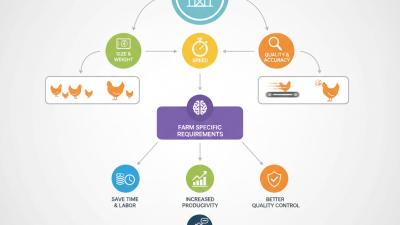
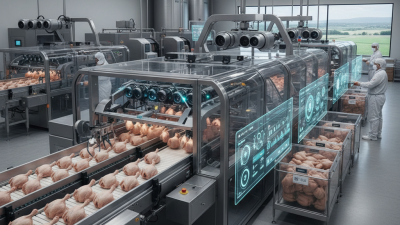
Compare Chicken Sorting Machine Types and Processing Capacity

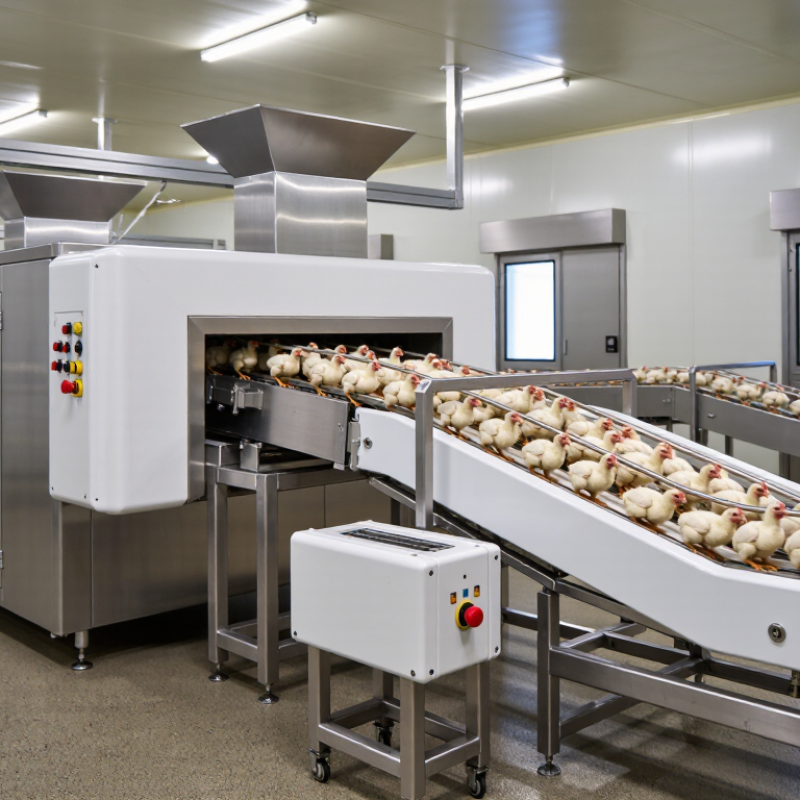
Chicken sorting machines range from manual-assisted tables to semi-automatic graders and fully automated systems. Manual models can suit small batches, where an operator checks each bird and directs it into a crate. Semi-automatic machines reduce repeated lifting and sorting, while automated lines use conveyors and sensors to handle higher volumes. More automation is not automatically better. It can add cleaning, training, and maintenance demands.

Compare stated capacity in birds per hour, then check how it was measured. A figure based on steady, uniform birds may not reflect a mixed flock or frequent pauses. Ask whether capacity changes with bird size, weight range, sorting accuracy, or the number of output lanes. That matters. Watch a sample run, if possible, and note where birds queue or operators need to intervene. A fast conveyor is not useful if the grading station becomes a bottleneck.

Match the machine to both peak demand and typical daily volume. Buying for the busiest hour alone may leave an oversized system underused for much of the year. Buying too small can create delays during seasonal surges. Consider available floor space, crate handling, washdown access, and the skills of your operators. I would also leave some capacity headroom, but not treat it as a substitute for checking real throughput. Ask for clear service intervals and spare-part availability before deciding.

Assess Sorting Accuracy, Bird Handling, and Animal Welfare

A chicken sorting machine should deliver repeatable results, not just impressive figures on a specification sheet. Ask how it measures each bird and how often its sensors need calibration. During a trial, compare machine grades with careful manual checks across several batches. Include birds of different sizes, since a uniform sample can hide errors. Small details matter. Record mis-sorts and note whether accuracy changes as the line speeds up.

Bird handling deserves equal attention. Watch the full route, from entry to exit: sharp turns, sudden drops, narrow guides, and crowded holding areas can cause stress or injury. Birds should move steadily, with room to keep their balance and wings close to their bodies. Listen for repeated alarm calls and watch for slipping, piling, or forceful wing flapping. These signs may be easy to miss when the line is busy. Reduce speed if needed, even when that lowers output.

Good welfare checks require more than a quick walkthrough. Observe multiple cycles, including busy periods, and ask trained staff to record injuries and unusual behavior. Check whether cleaning and maintenance leave smooth surfaces and reliable sensors. No single score captures every bird’s response, and that makes comparisons imperfect. Still, consistent records can reveal patterns and help teams adjust settings before small problems become routine.

7 Tips for Choosing the Best Chicken Sorting Machine

Compare each machine across these practical selection criteria. The scores below are illustrative example ratings out of 5, not measured industry results; assess equipment under your own operating conditions.

Prioritize sorting accuracy, gentle bird handling, and animal welfare. Also review throughput, adjustability, ease of cleaning, and operator safety before making a selection.

Check Hygiene Features, Automation, and Farm-System Compatibility

Tip 1: Check hygiene features before comparing output rates. Look for smooth, corrosion-resistant surfaces, accessible guards, and removable trays. Fewer seams can leave fewer places for residue to collect. Ask how contact parts are cleaned between shifts. Can staff reach the underside without tools? A washdown demonstration is more useful than a glossy brochure.

Tip 2: Match automation to the people operating the line. Adjustable speed, clear controls, and easy-to-read fault alerts can reduce handling errors. Ask the supplier to demonstrate a normal changeover, not just steady production. Small details matter. A control screen that seems simple in a showroom may be confusing with wet gloves or a busy crew nearby. More automation is not always better if routine cleaning becomes difficult.

Tip 3: Check compatibility with your farm system before buying. Compare the machine’s capacity with your flock size, conveyor height, available floor space, and existing power supply. Confirm that incoming birds can be handled gently and that sorted groups move smoothly to the next station. Fit matters. Measure the actual route, including doors and corners. It is easy to overlook these constraints; I would not rely on a floor plan alone. A practical site check can reveal awkward turns or service access problems before installation.

7 Tips for Choosing the Best Chicken Sorting Machine - Check Hygiene Features, Automation, and Farm-System Compatibility

Tip Evaluation area What to check Practical verification
1. Check cleanability and hygiene design Materials and construction Inspect product-contact surfaces, joints, fasteners, and hard-to-reach areas. Confirm that materials and finishes suit the cleaning chemicals and procedures used on your site. Review the cleaning instructions and material documentation. Ask for a demonstration of routine cleaning, including access beneath belts and around weighing components.
2. Match automation to your workflow Sorting and operator tasks Determine whether birds are identified, weighed, sorted, and directed automatically, and which tasks still require manual handling or supervision. Map the machine’s steps against your current process. Confirm alarm handling, manual override, recipe or grade changes, and operator training requirements.
3. Size capacity for the whole line Throughput and bottlenecks Compare the machine’s rated throughput with the actual speed of the upstream and downstream equipment, including normal pauses and peak operating periods. Request a capacity figure for your bird size range and operating conditions. Check whether the quoted rate is sustained production throughput or a short-duration maximum.
4. Validate weighing and sorting performance Measurement and grade settings Check the stated weighing tolerance, repeatability, sorting thresholds, and how the system handles movement, uneven loading, or birds outside the configured range. Run a witnessed test using representative birds and compare machine readings with a suitable reference scale. Agree on test conditions and acceptance limits before purchase.
5. Consider bird handling and welfare Handling points and movement Look for smooth transitions, suitable contact surfaces, and a layout that avoids unnecessary drops, sharp edges, crowding, or prolonged restraint. Observe a representative operating cycle. Have site staff assess handling against applicable animal-welfare requirements and the farm’s own procedures.
6. Confirm compatibility with the farm system Physical, electrical, and data interfaces Check footprint, conveyor height and direction, power supply, control signals, guarding, and whether production data can be exported in a usable format. Compare a site layout and utility survey with the machine drawings. Confirm interface details with the suppliers of connected conveyors, controls, and farm-management systems.
7. Assess maintenance and support Serviceability and operating costs Review access to wear parts, calibration procedures, fault diagnostics, spare-parts availability, warranty terms, and local technical support. Request a preventive-maintenance schedule and parts list. Confirm expected service response arrangements and include cleaning, labor, consumables, and downtime in total-cost estimates.

Evaluate Total Cost, Maintenance, Safety, and Supplier Support

When choosing a chicken sorting machine, compare more than its purchase price. Calculate total cost across its expected service life: installation, energy, spare parts, cleaning time, and production lost during repairs. Ask for a written estimate based on your line speed and shift pattern. Downtime gets expensive.

The OECD-FAO Agricultural Outlook 2023–2032 projects poultry meat will provide 41% of all meat-derived protein by 2032. That demand makes reliable throughput valuable, but a faster sorter is not automatically a better investment. Check sorting accuracy with birds of different sizes, and ask how the machine handles feathers or moisture around sensors. A short factory demonstration may not reflect a full, wet production shift.

Maintenance and safety deserve equal attention. Request the recommended service intervals, spare-part lead times, and a sample maintenance checklist. OSHA’s poultry-processing guidance flags repetitive motion and awkward postures as ergonomic hazards; inspect access points, guards, and cleaning procedures with operators present. Ask for supplier training and response-time commitments in writing. Ask for evidence. A spreadsheet still misses small frustrations, like a hard-to-reach adjustment knob. That detail matters.