Top 10 Benefits of Using Automatic Checkweighers for Businesses?
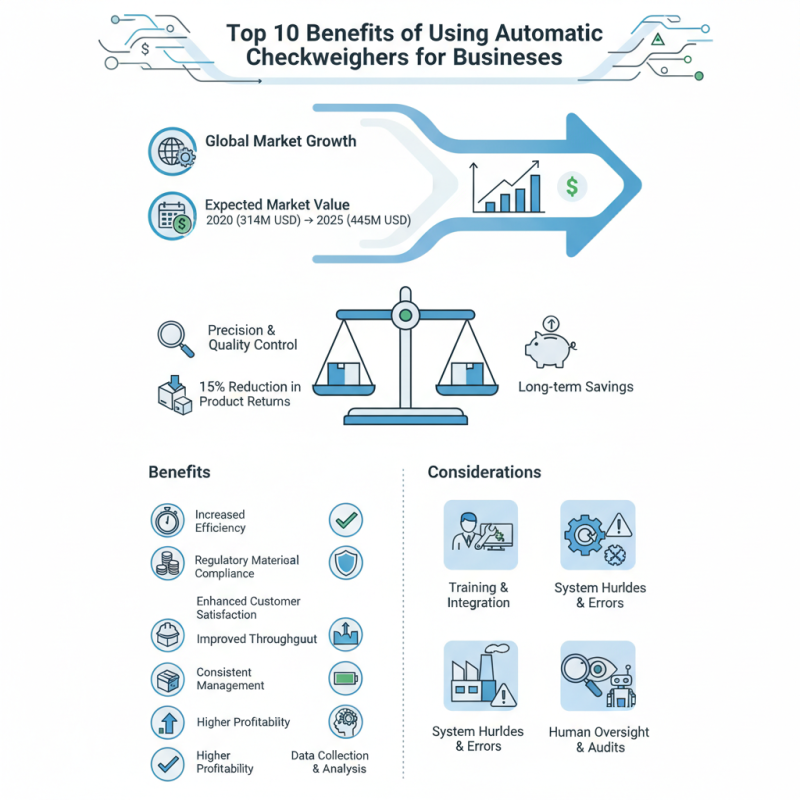
The use of Automatic Checkweighers in industries has surged in recent years. According to a report by Markets and Markets, the global checkweighers market is expected to grow from 314 million USD in 2020 to 445 million USD by 2025. This growth reflects increasing demands for quality control and compliance in manufacturing processes.
Automatic Checkweighers offer businesses precision that manual methods cannot match. They ensure that every package meets weight specifications, reducing the risk of customer complaints and potential losses. In fact, some studies indicate that businesses using these machines report a 15% decrease in product returns due to weight discrepancies. While the initial investment can be significant, the long-term savings often outweigh the costs.
However, it’s essential for companies to be mindful of technology’s limitations. Implementing Automatic Checkweighers requires training, and there can be hurdles in integrating them into existing systems. Mistakes can happen, which necessitates regular audits and staff evaluations. It’s vital to balance automation with human oversight for optimal results.
Benefits of Automatic Checkweighers in Enhancing Product Quality
Automatic checkweighers are vital for businesses that prioritize product quality. They ensure each item meets weight specifications, reducing human error. According to industry reports, 85% of manufacturing defects are linked to improper weight measurements. By using checkweighers, companies can maintain tighter control over their operations.
Enhanced product quality is only the beginning. Consistent weight checks improve customer satisfaction. Products that meet weight standards foster trust and loyalty. In fact, studies show that 70% of consumers consider packaging weight crucial when purchasing. Ensuring that all products are accurately weighed not only enhances quality but prevents costly recalls.
Tip: To optimize the performance of your checkweighers, consider regular calibration. This ensures accuracy and compliance with industry standards.
While checkweighers can streamline processes, they require proper implementation. Staff must be trained on equipment usage. Without this, the potential for errors increases. Checkweighers are not a “set it and forget it” solution. Regular maintenance is essential to maximize their benefits.
Tip: Conduct routine audits to identify areas for improvement. This helps in leveraging checkweighers effectively for quality assurance.
Cost Savings Through Reduced Overpackaging and Waste Management
Using automatic checkweighers offers numerous advantages for businesses. A primary benefit is cost savings. Companies often face hefty expenses due to overpackaging. When products are overpacked, they waste materials and add unnecessary transportation costs. By accurately measuring weights, businesses can optimize packaging. This leads to smarter inventory management. In turn, companies can reduce waste and save money.
Another aspect to consider is efficient waste management. Overpackaging can contribute to environmental concerns. Excessive packaging harms our planet. Automatic checkweighers help limit packaging waste. By ensuring products are weighed precisely, businesses can package products correctly. This also enhances customer satisfaction. Happy customers prefer streamlined packaging.
Tips:
- Regularly calibrate your checkweighers for accuracy.
- Analyze weight data to identify patterns in overpackaging.
- Train staff to understand the importance of precision.
Fewer mistakes mean less waste. Finding ways to improve weight accuracy is essential. Each small change can lead to significant savings over time. Consider your current processes, and reflect on where waste occurs. Are your weights leading to efficiency? It’s worth exploring.
Improving Compliance with Industry Standards and Regulations
Automatic checkweighers are essential for businesses aiming to improve compliance with industry standards and regulations. These devices ensure products are within weight specifications, reducing the risk of penalties. According to recent industry reports, non-compliance can cost businesses up to $10 million annually. This staggering figure highlights the need for precise weight measurement.
Maintaining compliance is not just about avoiding fines. It's about customer trust. Over 70% of consumers prefer brands that stick to regulations. Automatic checkweighers help businesses achieve this. They provide real-time data, which makes it easier to address discrepancies. However, many companies still rely on manual checks, which are prone to errors. This can lead to compliance issues, reflecting poorly on business reputation.
Facing compliance isn't easy. Many companies struggle with adapting their processes. Some may find the initial investment daunting, while others worry about integration with existing systems. Yet, ignoring the issue can lead to bigger problems down the line. The efficiency offered by automatic checkweighers can ultimately save money, even if the upfront costs seem high. Companies must weigh short-term challenges against long-term gains for effective compliance.
Top 10 Benefits of Using Automatic Checkweighers for Businesses
| Benefit |
Description |
Impact on Compliance |
| Accuracy |
Achieves high precision in weight measurement to ensure product quality. |
Helps in meeting legal weight requirements. |
| Speed |
Processes products rapidly, increasing production efficiency. |
Supports timely compliance reporting and audits. |
| Cost Reduction |
Reduces waste and production costs through accurate weighing. |
Enhances financial compliance audits by minimizing losses. |
| Consistency |
Ensures uniformity in product weight, maintaining brand integrity. |
Meets industry standards for quality control. |
| Data Collection |
Automatically logs weight data for analysis and reporting. |
Facilitates compliance documentation and process improvement. |
| Regulatory Compliance |
Helps businesses adhere to local and international regulations. |
Mitigates risks of fines and legal issues. |
| Flexible Integration |
Easily integrates into existing production lines and systems. |
Enhances operational compliance without major disruptions. |
| User-Friendly Interface |
Simple controls and display for easy operation by staff. |
Reduces training time and operational errors. |
| Minimized Human Error |
Automates the weighing process, reducing mistakes. |
Improves reliability in compliance checks. |
| Enhanced Customer Satisfaction |
Ensures customers receive the correct product weight. |
Builds trust and loyalty, contributing to market compliance. |
Streamlining Production Processes for Higher Efficiency
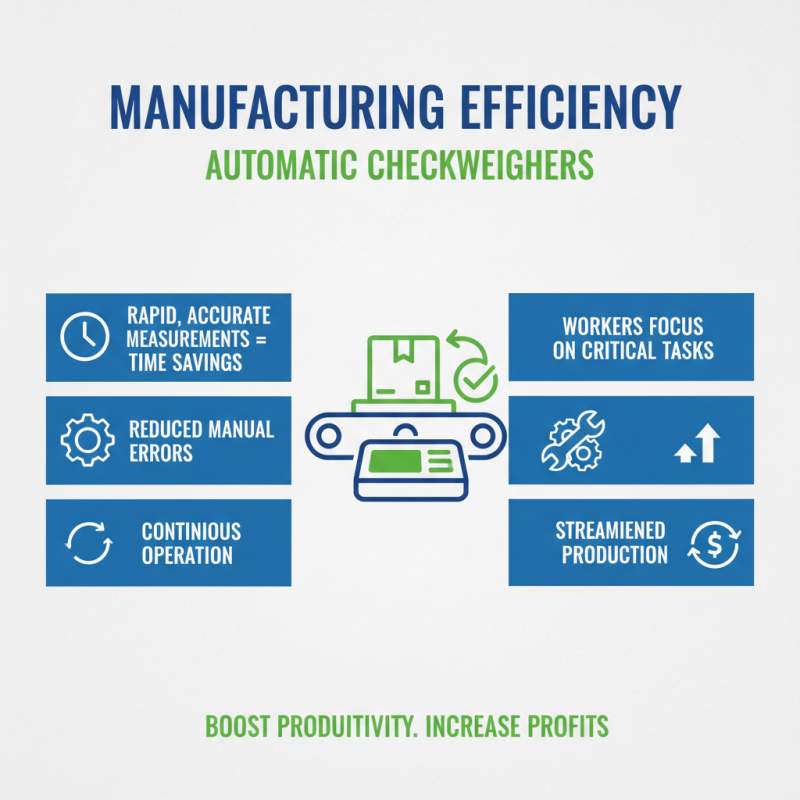
In today's fast-paced manufacturing environment, efficiency is crucial. Automatic checkweighers significantly streamline production processes. They provide rapid, accurate measurements that save time. This automation reduces manual errors and allows for continuous operation. Workers can focus on other important tasks while the checkweighers handle measurements.
Implementing these systems does come with challenges. Initial costs might be high, and training staff can take time. Not all products are suitable for these machines. Sometimes, adjustments are required to fit different items. Manufacturers can miss these details without careful planning. Regular maintenance is also necessary to avoid unexpected downtime.
Despite these hurdles, the benefits are clear. Enhanced accuracy leads to reduced waste. This efficiency can significantly boost profit margins. By eliminating human error, businesses ensure consistent quality in their products. The integration of automatic checkweighers represents a step forward, yet maintaining this technology requires ongoing effort and reflection.
Increasing Customer Satisfaction with Accurate Product Weights
Accurate product weights are crucial for maintaining customer satisfaction. A recent report indicates that 94% of customers prefer brands that deliver consistent quality. Overweight products can lead to increased costs and potential penalties, which negatively affect profitability. In fact, businesses can lose up to 2% of revenue due to inaccuracies in product weight.
Automatic checkweighers help mitigate these issues. They ensure that every package meets weight specifications. This technology can achieve an accuracy rate of up to 99.9%. Moreover, reducing variation in product weight can elevate customer trust. Customers feel valued when they receive exactly what they pay for.
However, not all companies utilize these systems effectively. Some still rely on manual processes. In such cases, errors can occur frequently, leading to dissatisfied customers. Companies need to reflect on their handling of product weights. Implementing automated solutions could be the key to enhancing both accuracy and satisfaction.