Top 10 Automatic Metal Detectors in China for Safety and Security
The safety and security landscape in China is evolving rapidly. Automatic Metal Detectors (AMDs) play a crucial role in this transformation. Industry reports indicate that the global metal detection market reached approximately $1.4 billion in 2022, with a projected annual growth rate of 8.5%. This surge highlights the increasing demand for advanced security measures.
In various sectors, from public transportation to event venues, the need for reliable detection systems is paramount. Automatic Metal Detectors are essential tools to identify concealed weapons and threats effectively. However, challenges remain, including the need for accurate calibration and the potential for false positives. These factors can impact the effectiveness of security protocols, necessitating continuous improvement in technology and training for personnel.
Despite their advancements, not all Automatic Metal Detectors perform equally. Variability in sensitivity and user experience can lead to inconsistent detection rates. As organizations prioritize safety, understanding these nuances is vital. As the market expands, thoughtful considerations around technology and design will shape the future of automatic metal detection in China.

Overview of Automatic Metal Detectors and Their Importance in Safety
Automatic metal detectors play a vital role in ensuring safety and security in various environments. These devices are designed to identify metallic objects, enhancing security at public events, schools, and government buildings. Their importance has grown significantly, especially in high-traffic areas where the risk of concealed weapons is a concern.
When using metal detectors, proper training is essential. Operators should understand the device's settings and how to interpret alerts. Calibration checks are necessary to maintain accuracy. Regular maintenance can prevent false alarms and ensure reliability. The location of the detector matters as well. Installing it at entry points optimizes its effectiveness.
Tip: Always conduct a thorough inspection of the surroundings when setting up a metal detector. This helps in recognizing the potential interference of other metal objects nearby.
Moreover, while metal detectors can help enhance safety, they are not foolproof. Users must remain vigilant and combine the technology with other security measures. Remember, no device can replace human judgment and observation.
Key Features to Consider When Choosing a Metal Detector
When choosing a metal detector, understanding key features is essential.
Detecting depth is one of the most crucial aspects.
A detector needs to reach various depths to find items effectively.
For safety applications, this feature can determine if a hidden object is found quickly.
The type of search coil also matters.
Wide search coils cover larger areas, while smaller coils can detect items in cluttered environments.
Another important feature is sensitivity adjustment.
Users should be able to tweak sensitivity settings based on their surroundings.
High sensitivity may pick up unwanted signals from small metal objects.
Having a discrimination setting helps filter out these signals, enhancing detection quality.
A metal detector should also be lightweight and easy to handle.
Heavy detectors can cause fatigue during prolonged use.
Additionally, consider the power source.
Rechargeable batteries can save money in the long run.
Yet, they come with the need for regular charging, which can be inconvenient.
In some cases, a simple alkaline battery might be more reliable for immediate use.
Finding the right balance between these features can be tricky but is crucial for effective performance.
A deep understanding of these elements will lead to wiser choices.
Top 10 Automatic Metal Detectors Available in China
In the realm of safety and security,
metal detectors play an essential role.
Automatic metal detectors are crucial for various applications, from airports to schools.
According to recent industry reports, the market for security equipment, including metal detectors,
is projected to reach $30 billion globally by 2025. China has become a key player in this market,
offering numerous models that cater to different needs.
When selecting a metal detector, key features matter. Sensitivity and detection depth are vital for effective operations.
Lightweight designs improve mobility, which is essential in busy environments. Understanding the environment
where the detector will be used can also influence your choice. Moreover, investing in technology that minimizes
false alarms can greatly enhance efficiency.
Tips: Always consider user feedback on performance.
Not all detectors are equal; some may miss smaller items. Regular maintenance can improve detector longevity
and accuracy. Be cautious about your selections. Some products may not meet safety standards.
Thoroughly verify specifications and reviews to ensure reliability.
Comparative Analysis of Performance and Pricing of Leading Models
When examining automatic metal detectors available in China, an in-depth analysis reveals a wide variation in performance and pricing. Models differ significantly in sensitivity, with some excelling at detecting small metal objects, while others struggle. This can lead to potential gaps in security if users rely on less effective devices. Not all detectors provide the same level of reliability, which is crucial for safety applications in public spaces.
Pricing also varies widely among leading models. Higher-priced units often feature advanced technology and better build quality. However, some budget-friendly options offer decent functionality which may satisfy less demanding users. It's notable that affordability can compromise performance in some cases.
Selecting the right metal detector requires careful consideration of these factors. Users should weigh their specific needs against the strengths and weaknesses of different models. A detector that performs well in one environment may not work as effectively in another. Hence, it is important to conduct thorough research and reviews before making a purchasing decision.
Applications of Metal Detectors in Various Security Scenarios
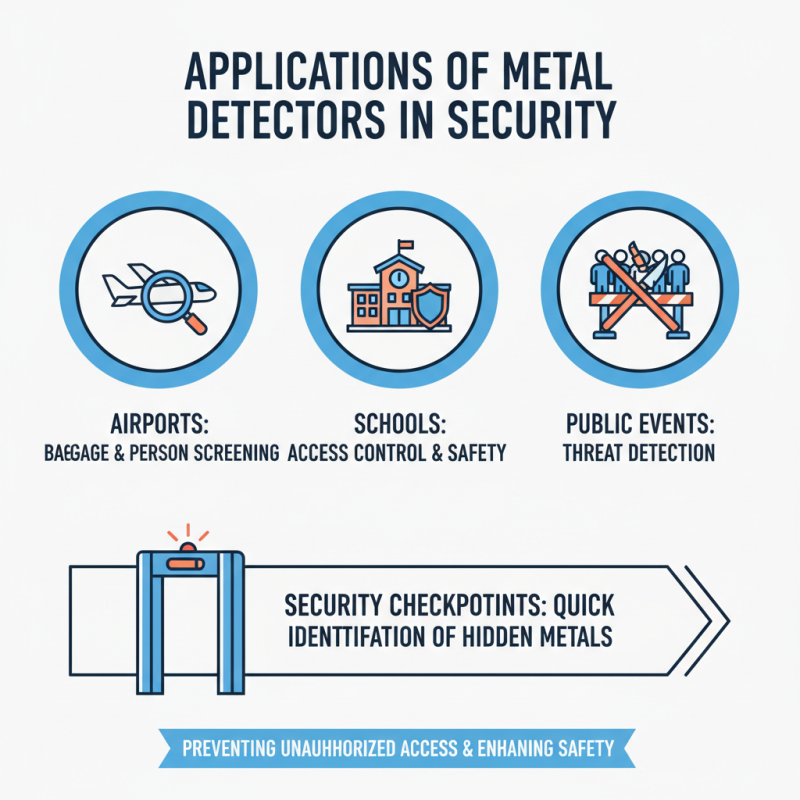
Metal detectors play a crucial role in enhancing safety and security across various scenarios. They are widely used in airports, schools, and public events. At security checkpoints, metal detectors efficiently identify hidden metal objects. This quick identification helps maintain a secure environment. Moreover, these devices are essential in preventing unauthorized access to restricted areas.
In large gatherings, such as concerts, metal detectors serve as a first line of defense. They effectively screen attendees, reducing the risk of incidents. However, the effectiveness of metal detectors also depends on proper training of security personnel. Without trained staff, the technology may not be utilized to its full potential.
In schools, the presence of metal detectors can promote a sense of safety among students and staff. Yet, this might create a perception of mistrust. Regular maintenance and updates to detection systems are necessary for optimal performance. The evolving technology of metal detectors brings both benefits and challenges in different security contexts. Addressing these challenges is key to improving overall safety.