What is a Thermal Label Printer and How Does It Work for Your Business
In today's fast-paced business landscape, efficiency and accuracy are paramount for success. One of the key tools that have emerged to support these goals is the Thermal Label Printer. According to a recent study by MarketsandMarkets, the global thermal label printer market is projected to reach $8.53 billion by 2025, reflecting a compound annual growth rate (CAGR) of 5.6%. This growth is largely driven by the increasing demand for high-quality printing solutions across various industries, including retail, logistics, and healthcare.
Industry expert John Millar, a leading analyst at the Global Printing Innovations Institute, notes, "The adoption of Thermal Label Printers has transformed how businesses manage inventory, shipping, and labeling processes. Their efficiency in producing clear and durable labels not only reduces operational costs but also enhances customer satisfaction." This statement underscores the importance of integrating modern printing technology into daily business operations, highlighting that thermal printing offers significant advantages over traditional methods, such as lower ink costs and faster print speeds.
As businesses continue to evolve, understanding the capabilities and benefits of Thermal Label Printers becomes increasingly critical. By leveraging this technology, organizations can streamline their operations, improve accuracy in labeling, and ultimately, contribute to a more efficient workflow.

What is a Thermal Label Printer? An Overview of Its Functions
A thermal label printer is a specialized device designed to produce high-quality labels using heat. Unlike traditional printers that rely on ink or toner, thermal printers use a heat element to transfer designs onto specially coated thermal labels. When the printer heats up the specific areas of the label, it creates a durable and smudge-resistant print. This process is not only efficient but also cost-effective, making it a popular choice for businesses needing to produce labels quickly and reliably.
One of the primary functions of a thermal label printer is its ability to create labels for various applications, including shipping, inventory management, and product labeling. The speed and precision of thermal printing make it ideal for high-volume tasks, ensuring that businesses can maintain productivity without sacrificing quality. Additionally, its versatility caters to various label sizes and styles, which can accommodate different requirements across industries.
Tips: When choosing a thermal label printer, consider the required print speed and resolution for your specific needs. Also, ensure compatibility with your labeling software or systems to streamline the printing process. Lastly, regularly maintain the printer to extend its lifespan, such as cleaning the print head to prevent residue build-up.
The Technology Behind Thermal Label Printing: Direct vs. Transfer Methods
Thermal label printing technology primarily involves two methods:
direct thermal and thermal transfer.
In direct thermal printing, heat-sensitive paper is used, which turns black when exposed to heat from the printer's print head.
This method is particularly efficient for short-term applications, as the labels are typically less durable and may fade over time when exposed to light or heat.
Businesses often use direct thermal printing for shipping labels, receipts,
and product labels that do not need to withstand harsh conditions.
On the other hand, thermal transfer printing employs a different approach. It involves a ribbon coated with wax, resin, or a combination of both,
which is melted by the print head and transferred onto the label material. This method creates more resilient and long-lasting labels,
making it suitable for harsh environments or applications where the labels are expected to last longer.
Companies that require barcodes, asset tags,
or labels for chemical containers often prefer thermal transfer printing for its durability and
ability to produce high-quality graphics and text. Understanding these two methods allows businesses to choose the right thermal label printing technology based on their specific needs and operational requirements.
Key Applications of Thermal Label Printers in Various Industries
Thermal label printers have become essential tools across various industries due to their speed, efficiency, and versatility. In retail, these printers are used to generate price tags, product labels, and shipping labels, ensuring products are accurately labeled for customer convenience. The ease of printing labels on-demand helps retailers maintain up-to-date pricing and promotes a smoother inventory management process. Moreover, thermal printers facilitate quick transactions, improving the overall shopping experience for customers.
In logistics and warehousing, thermal label printers play an invaluable role in tracking shipments and managing inventory. They are commonly used to print barcodes and tracking labels that enhance the efficiency of order fulfillment and reduce errors. By ensuring that each package is correctly labeled, businesses can streamline their operations, minimize delays, and provide reliable tracking information to customers.
Additionally, in healthcare settings, thermal label printers assist in labeling medication, medical equipment, and patient identification wristbands, contributing to patient safety and organizational efficiency. These printers' adaptability to diverse labeling requirements makes them integral in optimizing processes across various sectors.
Advantages of Using Thermal Label Printers for Business Efficiency
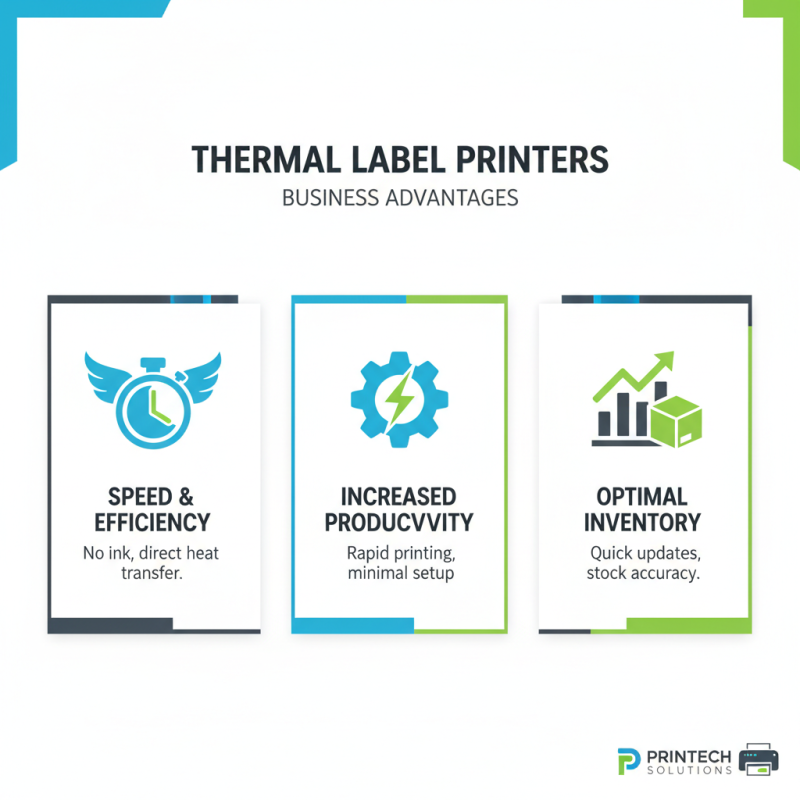
Thermal label printers have revolutionized the way businesses manage their labeling needs. One of the main advantages of using these printers is their speed and efficiency. Traditional printing methods often require lengthy setups and consumables like ink, which can hinder productivity. In contrast, thermal printers utilize heat to transfer images directly onto labels, significantly reducing printing time. This quick turnaround allows businesses to respond swiftly to inventory changes, enabling them to maintain optimal stock levels without delay.
Moreover, thermal label printers are cost-effective over time. While the initial investment may be higher than other printing technologies, the elimination of inks and toners leads to reductions in ongoing operational costs. Furthermore, the longevity and durability of thermal labels enhance logistical operations, minimizing waste and the need for frequent replacements. This efficiency not only boosts productivity but also supports sustainable practices by reducing material usage. Overall, the integration of thermal label printers in a business can streamline operations, cut costs, and enhance the overall labeling process, serving as a strategic asset for any organization looking to improve its workflow.
Industry Statistics: Growth and Adoption Rates of Thermal Label Printers
The adoption of thermal label printers has seen significant growth across various industries, driven by the increasing need for efficient labeling solutions. According to recent industry statistics, the market for thermal label printers is projected to expand at a compound annual growth rate (CAGR) of over 5% in the coming years. This surge can be attributed to the rising demand for shipping labels in e-commerce, as well as the necessity for compliance labeling in sectors such as manufacturing and pharmaceuticals. Companies are recognizing the value of quick, cost-effective labeling processes that thermal printing offers.
Furthermore, the expanding capabilities of thermal label printers are facilitating their acceptance in diverse applications. From logistics to inventory management, businesses are increasingly integrating these printers into their operations to streamline workflows. Notably, advancements in technology have enhanced the ease of use and versatility of thermal label printers, making them an attractive choice for both small businesses and large corporations. As industries continue to digitize their supply chains and improve operational efficiency, the adoption rates of thermal label printers are expected to rise, marking them as a critical tool for modern business operations.