How to Choose the Best Analytical Balance for Your Laboratory Needs
In the realm of laboratory measurements, the accuracy and precision of data are paramount, especially when it comes to weighing samples. An Analytical Balance stands at the forefront of laboratory equipment, providing the essential capability to measure mass with an unmatched degree of precision, typically within 0.0001 grams or better. According to the International Organization for Standardization (ISO) standards, analytical balances are critical for a broad spectrum of applications, including chemical analysis, pharmaceuticals, and materials testing, where even the smallest deviation can lead to significant discrepancies in results.
The global market for analytical balances is projected to grow significantly, driven by the increasing demand for high-precision weighing in various sectors. Industry reports indicate that advancements in technology and the growing emphasis on regulatory compliance are propelling laboratories to invest in high-quality analytical balances that offer enhanced features such as built-in data management systems and improved user interfaces. As laboratories strive to maintain accuracy and reliability in their measurements, understanding the various types, features, and specifications of analytical balances becomes imperative for making informed purchasing decisions.
Selecting the right analytical balance is not merely a matter of budget; it is a crucial step that impacts the overall quality of research and development outcomes. Therefore, it is essential for laboratory managers and personnel to comprehend their unique weighing requirements, ensuring that the analytical balance purchased aligns perfectly with their operational needs while adhering to the stringent standards set forth by industry regulators.

Understanding the Importance of Analytical Balances in Laboratories
Analytical balances are vital tools in laboratories, playing a crucial role in various scientific tasks that require precision and accuracy. These instruments allow researchers to measure mass with an exceptional degree of accuracy, often to the microgram level. This capability is essential in a wide range of applications, from chemical analysis to pharmaceutical development and food testing. The precision offered by analytical balances ensures that experimental results are reliable, reproducible, and consistent, which is critical for maintaining the integrity of scientific research.
When selecting an analytical balance, consider the specific requirements of your laboratory. Factors such as capacity, readability, and environmental conditions can significantly influence your choice. For optimal results, ensure that the balance is placed on a stable, vibration-free surface to minimize errors caused by external disturbances. Additionally, calibrating the balance regularly is essential to maintain its accuracy over time.
**Tips:** Always check the calibration status of your analytical balance before use. It's also beneficial to familiarize yourself with the manufacturer’s guidelines, as they often provide insights into the best practices for operation and maintenance. Finally, consider investing in protective accessories like draft shields to enhance the balance's performance and ensure measurement accuracy.
Key Features to Look for When Selecting an Analytical Balance
When selecting an analytical balance for your laboratory needs, there are several key features to consider that will enhance both accuracy and usability. First and foremost, the balance's readability is crucial. Typically, analytical balances offer readability down to 0.1 mg, which is essential for precise measurements. A balance with higher readability will allow for more detailed weighing results, making it suitable for various applications. Additionally, pay attention to the maximum capacity of the balance; ensuring that it meets your needs for the largest samples you may handle is important to avoid overloading.
Another significant factor to consider is the balance’s environmental protection features, such as draft shields and built-in tare functions. Draft shields prevent air currents from affecting measurements, which is particularly important in laboratories where airflow may be inconsistent. Furthermore, ease of use is critical. Look for a balance with a user-friendly interface, digital display, and intuitive controls, as this can save time and reduce the risk of errors during operation. For labs that require frequent data collection, consider balances with connectivity options for better integration with data management systems, enhancing the overall workflow efficiency. These features collectively contribute to more accurate results and a seamless laboratory experience.
Evaluating Precision and Accuracy in Analytical Balances
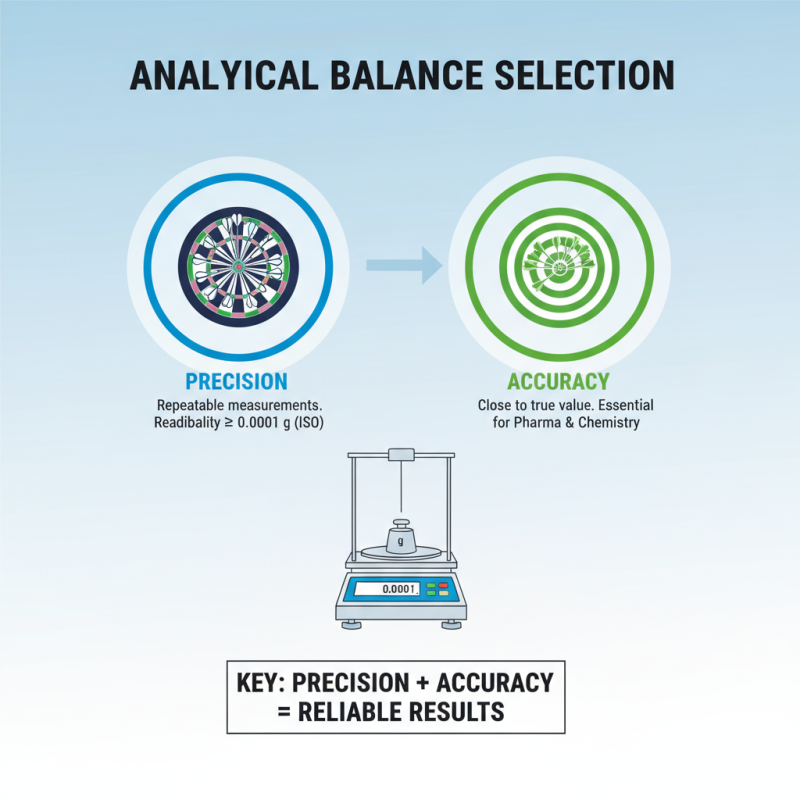
When selecting an analytical balance for laboratory use, evaluating its precision and accuracy is paramount. Precision refers to the balance's ability to provide the same measurement under unchanged conditions, while accuracy reflects how closely that measurement aligns with the true value. According to the International Organization for Standardization (ISO), an analytical balance must possess a readability of at least 0.0001 grams (or 100 micrograms) to meet precision demands in most laboratory applications. This level of precision ensures that even minute differences in sample weight can be detected, which is critical in fields such as pharmaceuticals and chemistry, where precision can affect outcomes significantly.
A recent report from the American National Standards Institute (ANSI) highlights that analytical balances with a comprehensive calibration system and internal diagnostics are essential for maintaining accuracy over time. The report states that thorough regular recalibration, ideally every 3 to 6 months, is necessary to ensure that the balances perform within their specifications. Factors such as temperature fluctuations, vibrations, and even air currents can influence the measurements, emphasizing the need for a balance with robust compensation systems. As a result, laboratories should prioritize analytical balances that offer features like draft shields and vibration resistance to enhance both precision and accuracy, ultimately leading to more reliable experimental results and data integrity.
Comparing Different Types of Analytical Balances on the Market
When selecting the best analytical balance for your laboratory, it's essential to understand the different types available on the market. Analytical balances are designed to measure mass with high precision, typically achieving a readability of 0.0001 grams (0.1 mg) or better. The primary types include top-loading balances, semi-micro balances, and micro balances, each serving distinct applications. According to a 2021 report by Research and Markets, the global analytical balance market is expected to witness a growth rate of about 6.5% per year, driven by advancements in laboratory automation and increased demand for accuracy in research and quality control.
Top-loading balances are generally easier to operate and offer a wider range of capacities, making them suitable for routine weighing tasks. In contrast, semi-micro and micro balances provide greater sensitivity, ideal for applications that require weighing small samples or small quantities of high-value materials. The analytical balance market is diversifying, as evidenced by the increase in hybrid models that blend features from different balance types. A study from the International Journal of Metrology highlights that the choice of balance significantly impacts experimental outcomes, emphasizing the importance of selecting the right instrument that aligns with laboratory needs and compliance standards.
Furthermore, features such as automatic calibration, internal weighing functions, and advanced connectivity options are becoming increasingly standard. According to a survey conducted by Lab Manager, nearly 75% of laboratory professionals prioritize user-friendly interfaces and innovative features when selecting analytical balances. As technology continues to evolve, the differentiation among analytical balance types, particularly in precision abilities and advanced functionalities, will play a crucial role in laboratory efficiency and data accuracy.
How to Choose the Best Analytical Balance for Your Laboratory Needs
| Model |
Capacity (g) |
Readability (mg) |
Repeatability (mg) |
Calibration Type |
Price ($) |
| Model A |
120 |
0.1 |
0.3 |
Internal |
350 |
| Model B |
210 |
0.01 |
0.1 |
External |
550 |
| Model C |
150 |
0.1 |
0.2 |
Internal |
430 |
| Model D |
250 |
0.001 |
0.05 |
External |
700 |
Maintaining and Calibrating Your Analytical Balance for Optimal Performance
Maintaining and calibrating your analytical balance is essential for ensuring accurate and reliable measurements in your laboratory. Regular maintenance involves a routine cleaning schedule and inspection of components to prevent contamination or wear that could affect performance. Clean the balance's pan and surrounding areas with appropriate solutions that won’t damage the equipment, and make sure to keep the laboratory environment stable, minimizing vibrations and drafts that can alter readings.
Calibration is another critical aspect that directly influences the performance of your analytical balance. It's recommended to calibrate your balance regularly, using certified weights that match the specifications of your balance, to ensure accuracy across a range of measurements. Depending on the usage and the environment, calibration may need to be performed daily, weekly, or monthly. Additionally, documenting each calibration session helps in tracking performance over time and complying with any regulatory requirements. Regular maintenance and calibration not only enhance the lifespan of your equipment but also contribute to the overall quality and reliability of your lab results.
Analytical Balance Performance Metrics
This chart displays key performance metrics for analytical balances commonly used in laboratories, including accuracy, precision, stability, calibration frequency, and maximum capacity. Understanding these metrics will help you choose the best analytical balance for your laboratory needs.