2026 Best Automatic Checkweigher Reviews and Buying Guide
In the competitive world of manufacturing, the accuracy and efficiency of weight measurement is crucial. Experts like Dr. Henry Lang, a leader in automation technology, emphasize, “A reliable Automatic Checkweigher can transform production lines.” This highlights the importance of these machines in ensuring product quality and compliance.
Automatic Checkweighers are designed to automate the weighing process, increasing speed and precision. They play a vital role in multiple industries, from food to pharmaceuticals. However, not all Automatic Checkweighers are created equal. When selecting one, it's essential to consider various factors, such as speed, accuracy, and adaptability to different product types.
Despite the advancement in technology, challenges remain. Many users report issues with calibration and maintenance. Evaluating long-term reliability and service support is often overlooked. This is crucial for maintaining continuous operation without delays. Understanding these details will guide your buying decision, ensuring you select the most suitable Automatic Checkweigher for your needs.
Overview of Automatic Checkweighers and Their Importance
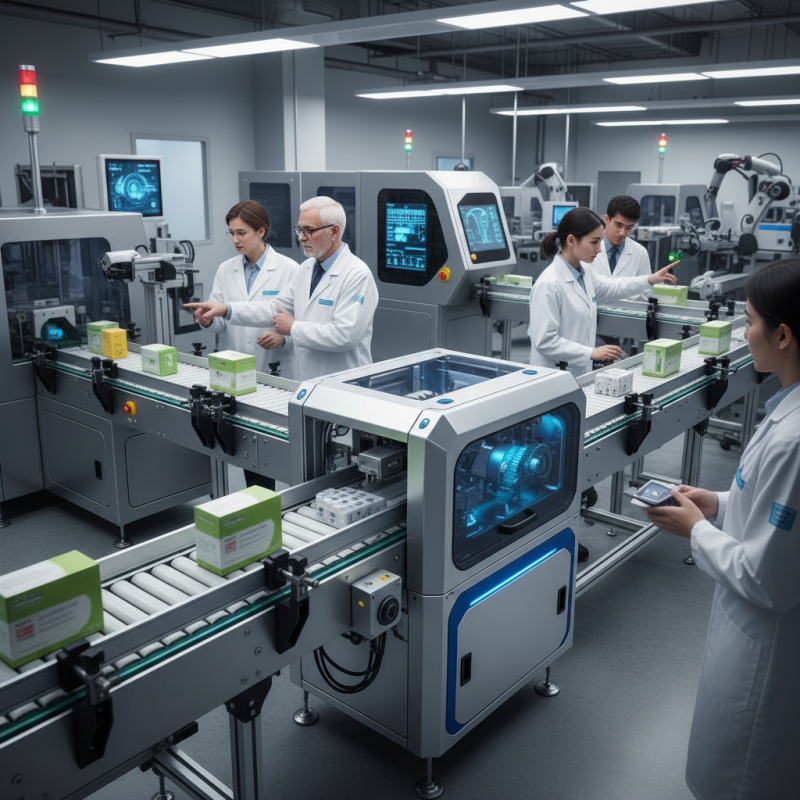
Automatic checkweighers play a crucial role in various industries. They ensure products meet weight specifications before packaging. Accurate weight measurement improves product quality and compliance. Businesses face increased scrutiny over weight discrepancies, which can lead to costly penalties. Therefore, understanding the importance of these devices is essential.
Many manufacturers rely on automatic checkweighers to optimize production. These machines enhance efficiency by quickly inspecting items on the production line. A well-calibrated checkweigher minimizes human error, reducing waste. However, improper calibration or maintenance can lead to inaccurate results, frustrating operators and impacting operations.
The integration of advanced technology in checkweighers has changed industry standards. Nowadays, some units provide real-time data analysis. This capability allows for immediate adjustments in production processes. Yet, not all companies fully utilize these features. Some may overlook the importance of regular updates and software enhancements. Proper training for staff on using these technologies remains vital in maximizing efficiency.
Key Features to Consider When Selecting an Automatic Checkweigher
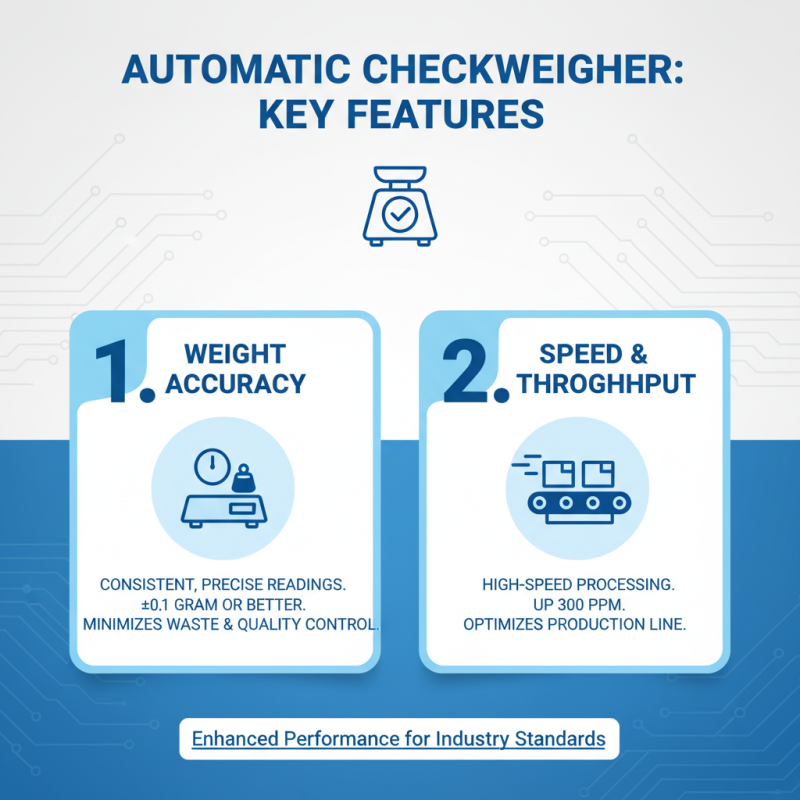
When selecting an automatic checkweigher, it's essential to look at key features that enhance performance. Weight accuracy is critical. A checkweigher must provide consistent and precise readings to meet industry standards. Look for devices that offer ±0.1 gram of accuracy or better. This ensures that each product is weighed correctly, minimizing waste and maintaining quality.
Another important feature is the speed of operation. Depending on your production line, you may need a checkweigher that can process items rapidly. High-speed models can weigh thousands of products per hour. However, faster doesn’t always mean better. Invest time in understanding the balance between speed and accuracy. A high-speed checkweigher that compromises accuracy can negatively impact your operations.
Consider the ease of use and maintenance as well. A user-friendly interface allows operators to program and adjust settings efficiently. Also, maintenance is vital for long-term reliability. Some checkweighers are easier to disassemble and clean. This might seem like a minor detail, but it can make a difference in daily operations. Inspecting these features carefully can lead to better decision-making.
Top Brands and Models: A Review of the Best Automatic Checkweighers
The automatic checkweigher market is rapidly evolving. According to recent industry reports, the global demand for automatic checkweighers is projected to grow at a CAGR of 5.6% through 2026. This growth is driven by the increasing need for quality control in food, pharmaceutical, and packaging sectors. Companies seek precision and efficiency in their production lines.
Key features to consider when evaluating automatic checkweighers include accuracy, speed, and ease of integration. Many models offer advanced sensors for precise measurements, capable of identifying discrepancies as small as 0.1 grams. However, reliance on technology must be balanced with regular maintenance to avoid errors. Some users report challenges in calibrating devices, which can lead to inconsistent results.
The top brands focus on user-friendly interfaces and robust construction. Nevertheless, investments in these systems can be daunting. Organizations should weigh the long-term benefits against upfront costs. It's crucial to analyze your specific needs before purchase. Data shows that automatic checkweighers can significantly reduce waste, but they require skilled operators for optimal performance.
Comparative Analysis of Prices and Performance in Automatic Checkweighers
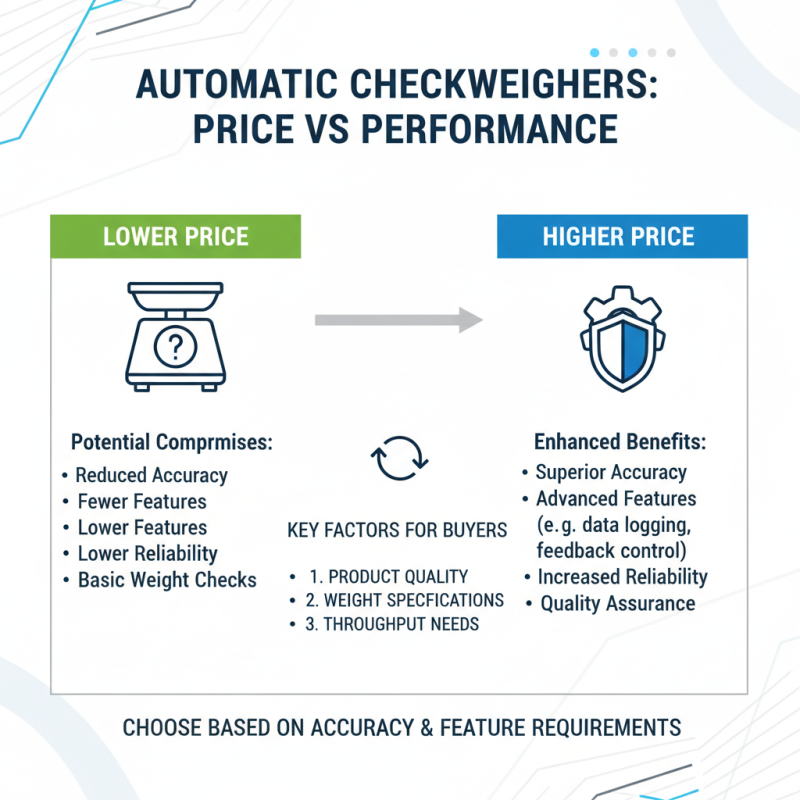
When examining automatic checkweighers, price and performance are crucial factors. These machines help maintain product quality by ensuring that items meet weight specifications. Buyers often face a variety of options, making comparative analysis essential. While some models are cheaper, they may compromise on accuracy. Higher-priced machines often come with advanced features that enhance both performance and reliability.
Tips: Consider your production scale. Smaller operations might not need complex features. Simple models can handle basic checkweighing tasks effectively. On the other hand, large-scale facilities should invest in high-performance machines to avoid discrepancies that could lead to costly losses.
Performance varies significantly among different models. It’s vital to check specifications like weighing speed and accuracy. Some machines may lag, affecting productivity. Regular maintenance is necessary for consistent operation. Without a proper maintenance schedule, even the best machines can underperform. Always leave room for adjustments based on real-world usage data. Doing this can optimize your operations and increase efficiency.
Maintenance and Calibration Tips for Optimal Checkweigher Performance
Maintaining and calibrating an automatic checkweigher is critical for ensuring accurate measurements. Regular maintenance checks help identify any wear or malfunction. These inspections should include cleaning the weighing platform and checking for debris. Even small particles can disrupt the accuracy of weight measurements. Ensure that the checkweigher is free from dust accumulation. It's a common oversight that can lead to skewed results.
Calibrating the checkweigher is equally important. This process involves using certified calibration weights. These weights ensure accuracy and should be checked frequently. Conducting calibrations in varying conditions—such as different temperatures—can reveal discrepancies. It's vital to document each calibration session. This information will help in identifying trends or recurring issues that may need addressing.
Once maintenance and calibration are in place, evaluate the checkweigher's performance regularly. Observe how it reacts to different products. Some users may notice that certain materials always yield different weights. This could indicate an underlying issue. Analyze these anomalies to prevent future fallout. Continuous evaluation ensures that the equipment remains reliable and efficient, and it helps in maintaining product quality.