Choosing a Rotary Collecting Table Machine is about more than finding the largest platform or the lowest price. The right model should match your line speed, product dimensions, and available floor space. A table that is too small may require frequent unloading, while an oversized unit can complicate an otherwise compact line. Fit matters.
This guide to the 7 Best Rotary Collecting Table Machines to Buy compares practical features that shape daily use. Consider table diameter, adjustable speed, construction quality, and how easily the machine connects with upstream equipment. Check whether controls are accessible and whether cleaning and routine maintenance are straightforward. Small details count.
Listen for unusual vibration during operation, and inspect the table edge and surface finish. These clues can reveal issues that a product photo will not show. Also confirm the manufacturer’s stated capacity and support options rather than relying on broad claims. Specifications can be confusing.
Different production needs call for different designs. A compact operation may value a smaller footprint, while a busy line may need smooth collection at higher output. There is no universal winner, and published specifications do not tell the whole story. This selection focuses on useful comparisons, helping buyers weigh performance, fit, and serviceability before choosing a machine. A careful match can make product handling more consistent, though installation and line setup still matter.
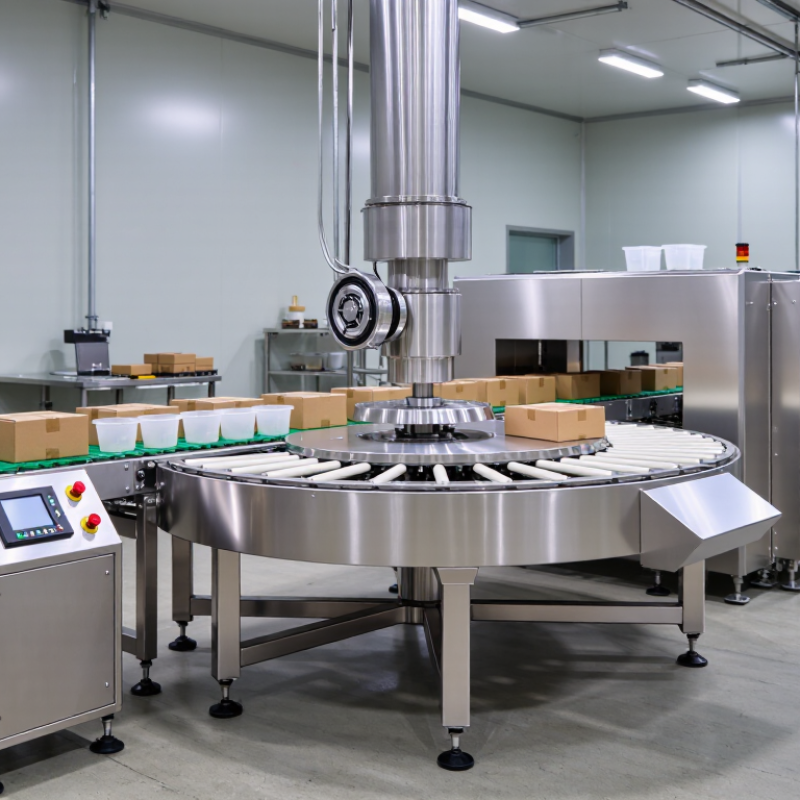
A rotary collecting table is a circular platform that receives finished products from a production line. Bottles, jars, or cartons move onto its surface through a transfer point. As the table rotates, items spread outward and gather within a rim or guide rail. An operator can then remove them for packing, inspection, or the next process. The principle is simple. A steady rotation creates a temporary buffer when downstream work cannot keep pace.
The table usually includes a motor, a rotating top, and adjustable guides. Speed controls help match its movement to the line, while guide rails reduce the chance of products slipping off. For example, a row of filled bottles can accumulate gently as workers place them into cartons. Small details matter. Table diameter, surface material, product shape, and transfer height all affect how smoothly items collect. A lightweight container may tip if the speed is too high; a rough surface can also cause scuffing. Operators should watch for crowding and adjust the feed rate rather than assuming a larger table will solve every bottleneck. These machines organize product flow, but they do not inspect, sort, or package items by themselves. A practical setup depends on the products and the people using it.

Rotary collecting table machines can differ greatly in capacity, stability, and line compatibility. When comparing seven options, check the table diameter, rated load, and adjustable rotation speed. A larger surface can hold more parts, but it also needs more floor space. Confirm the machine’s height matches the discharge point of your conveyor. Measure carefully. Look for variable-speed controls, guarded drive components, and an accessible emergency stop. Stainless steel may suit washdown areas, while coated steel can be practical in cleaner, dry settings. Ask for the duty cycle and electrical requirements, not just the headline speed.
Tips: Measure the largest product and expected batch before choosing. Check whether the edge lip is removable; it can help contain small items, but may obstruct some products.
Also compare wheel quality, leveling feet, and control placement. These details affect daily use more than glossy specifications suggest. A quiet motor and smooth rotation can reduce noise and product collisions. Request a demonstration with parts similar in size and weight to yours. One uncertainty worth admitting: published capacity does not always predict how neatly products will accumulate. A fast table may create a pile that operators must sort, so prioritize a stable, adjustable speed over maximum RPM alone.
Rotary collecting tables generally fall into three practical types: open-disc, rimmed-disc, and controlled accumulation models. An open-disc table suits small bottles or cartons that need gentle, visible buffering. Its broad, uncovered surface makes jams easy to spot, but items can drift toward the edge. A rimmed-disc design adds a raised perimeter for better containment, especially with round containers. Check the rim height against product shape; tall rims can make loading less convenient.
Controlled accumulation tables use guides, sensors, or variable-speed drives to manage product flow. They fit lines where upstream equipment runs faster than downstream packing. Grand View Research estimated the global packaging machinery market at USD 45.5 billion in 2023, reflecting broad investment in packaging operations. That figure does not prove every line needs automation. Match the table diameter to actual output and available floor space, then test with the lightest and most unstable product. A quiet, low-speed trial can reveal scuffing or tipping that a catalogue misses. Small details matter. A table that holds too much product may also create pressure, so “more capacity” is not always better.
The seven best rotary collecting table machines to compare are compact tabletop units, large-capacity tables, variable-speed models, stainless-steel designs, adjustable-guide tables, washdown-ready machines, and sensor-equipped systems. Each suits a different line layout. A small table can fit beside a benchtop filler, while a broad, variable-speed unit can buffer bottles leaving a faster line. Check the usable surface diameter, load rating, and speed range—not just the overall dimensions. Small details matter.
For wet or frequently cleaned areas, review weld quality, drainage, and access beneath the turntable. Adjustable guides help keep narrow containers upright, but poorly positioned rails can cause scuffing or jams. Sensor-equipped models can signal when products accumulate, though sensors add setup and maintenance needs.
The U.S. Bureau of Labor Statistics’ 2023 Survey of Occupational Injuries and Illnesses reported 2.8 total recordable cases per 100 full-time workers in manufacturing. That figure is not specific to collecting tables, but it supports careful attention to guarding, reach, and safe clearing procedures.
One weak buying habit is chasing maximum speed before checking how operators will unload the table. Ask suppliers for a sample run using your actual containers, including the lightest and tallest sizes. Watch for wobble, tipping, and difficult cleaning access. Compare those observations with written specifications; smooth showroom demonstrations can miss real production problems. A modest model may suit a short line better than an oversized machine.
Rotary collecting tables are useful at packaging-line discharge points, where bottles, jars, or cartons need a temporary landing area. They can reduce manual handling and absorb brief differences in line speed. Match table diameter and height to product size, conveyor width, and available floor space. Keep the transfer edge nearly flush; even a small lip can catch light containers. Set guide rails to prevent products bunching at the center. Small errors matter. Verify rotation and conveyor speeds with a full-load trial, not an empty-table test.
For setup, confirm the table is level, anchored, and clear of walkways. Check guarding and emergency stops before production. Maintenance should include regular cleaning, bearing and drive inspection, fastener checks, and listening for new vibration or scraping. The U.S. Department of Energy’s Operations & Maintenance Best Practices guide reports predictive maintenance can save 8–12% over preventive maintenance and 30–40% over reactive maintenance. Those are broad facility estimates, not guarantees for a single table. Deloitte and MAPI’s 2023 smart manufacturing survey found 86% of manufacturing executives expected smart manufacturing to drive competitiveness within five years; simple motor-current or vibration records can support that direction. Keep records. A handwritten log is not elegant, but missed checks are worse.
Suggested planning intervals in operating hours for common inspection tasks. Actual schedules depend on the machine, operating conditions, and manufacturer guidance.
Use these intervals as a starting point when planning routine care; follow the machine’s manual and site-specific maintenance procedures.